Monday, May 3, 2010
Blog #20 - Which "new" philosophy is your favorite / least favorite and why?
We have been studying 18th and 19th Century changes in philosophy in Europe and how the Industrial Revolution is sweeping away the old and rushing in some new radical ideas about how people view themselves, history and how they should treat each other. You can check your notes from Ch. 19, Sec. 4.
First, there are the economists like Thomas Malthus, Adam Smith and David Ricardo.
1. Malthus was the one who examined the ideas of population and plants and felt that as long as the population grew faster than the food supply, the world would run out of resources to adequately feed and clothe and warm that population at the comfort level they had come to expect. If things didn't change, people would die off, and countries might go to war over existing supplies of resources.
2. Adam Smith wrote his amazingly popular book, The Wealth of Nations, the same year that the Declaration of Independence was signed. In the book, he discussed the concept of The Invisible Hand (the self-regulating force of the marketplace) in which a growing economy lifts all boats, using the metaphor whether you're in a yacht, a canoe, a life raft, or a speed boat. He also is a big proponent of the concept of laissez-faire where the gov't leaves the economy alone, b/c otherwise it would artificially and negatively influence the economy.
3. With Ricardo, he also believed in laissez-faire too and opposed any help for the poor. The free market should help the poor and that they need to learn how to save, work hard and limit their family size. Ricardo's big idea was the Iron Law of Wages: the working class could not escape poverty b/c the wage increases won't cover enough of the necessities (food, shelter, clothes) to escape poverty since the prices will go up too.
Then there are the utilitarians.
4. Jeremy Bentham.
5. John Stuart Mill
How about socialism?
6. Main ideas of socialism -
7. Karl Marx -
Please answer these two questions:
1. Which of these philosophers' ideas appeals the most to you? Why?
2. Which of these ideas doesn't appeal to you? Why not?
Blog due Tuesday 5/4 200 words
First, there are the economists like Thomas Malthus, Adam Smith and David Ricardo.
1. Malthus was the one who examined the ideas of population and plants and felt that as long as the population grew faster than the food supply, the world would run out of resources to adequately feed and clothe and warm that population at the comfort level they had come to expect. If things didn't change, people would die off, and countries might go to war over existing supplies of resources.
2. Adam Smith wrote his amazingly popular book, The Wealth of Nations, the same year that the Declaration of Independence was signed. In the book, he discussed the concept of The Invisible Hand (the self-regulating force of the marketplace) in which a growing economy lifts all boats, using the metaphor whether you're in a yacht, a canoe, a life raft, or a speed boat. He also is a big proponent of the concept of laissez-faire where the gov't leaves the economy alone, b/c otherwise it would artificially and negatively influence the economy.
3. With Ricardo, he also believed in laissez-faire too and opposed any help for the poor. The free market should help the poor and that they need to learn how to save, work hard and limit their family size. Ricardo's big idea was the Iron Law of Wages: the working class could not escape poverty b/c the wage increases won't cover enough of the necessities (food, shelter, clothes) to escape poverty since the prices will go up too.
Then there are the utilitarians.
4. Jeremy Bentham.
5. John Stuart Mill
How about socialism?
6. Main ideas of socialism -
7. Karl Marx -
Please answer these two questions:
1. Which of these philosophers' ideas appeals the most to you? Why?
2. Which of these ideas doesn't appeal to you? Why not?
Blog due Tuesday 5/4 200 words
Saturday, April 24, 2010
Blog #19 - Top 3 Most Important Inventions in the Past 200 Years
For the past couple of days, we have been talking about the most influential inventions and concepts that have changed human life for the better or worse, initially in our short lives, and then we expanded it to the past 200 years (of course, the Snuggie is right up there in the Top 1 Million Inventions of the Decade).
There were a lot of great ideas listed during the brainstorming sessions. They included, but were not limited to:
- antibiotics, painkillers, refrigerators, televisions, telephones, harnessing the use of electricity, light bulb, airplanes, computers, calculators, air conditioning (I think that's in my selfish top 3), duct tape (someone insisted on putting it on the board), the car, steam engine, gasoline engine, light saber, and many others.
Your job in this blog is to think of how your life and your parents' and grandparents' lives would have been amazingly different w/o the top three inventions that you have chosen. Ask your parents and / or grandparents, aunts, uncles or other family members for perspective on technology, b/c we have a hard time looking past the few years we've lived in. Right now, I don't know how I've lived w/o cell phones, but I obviously had for over 20+ years. Now, try finding a pay phone. But my personal favorite invention in the past 200 yrs (mainly b/c I'm not a huge fan of going outside in the middle of the night when ya gotta go) is:
The flushing toilet, right along w/ toilet paper. It has made life so much more comfortable. You can laugh, but think of having a pit toilet in your back yard, and having to go there in the middle of the night. In the winter. I know, the girls, you would hold it, but the boys.... you're gross.
Here's a website where you can rank your own top ten list of inventions: http://www.the-top-tens.com/lists/top-ten-inventions-in-the-last-200-years.asp
Top medical breakthroughs - http://zayamsbury.net/top-medical-breakthroughs-of-the-past-200-years/index.html
Due Tuesday, 150 words total.
List your top 3 most influential inventions in America and explain why for each. Finding some reasons why and then citing them w/ online sources wouldn't be a bad idea.
There were a lot of great ideas listed during the brainstorming sessions. They included, but were not limited to:
- antibiotics, painkillers, refrigerators, televisions, telephones, harnessing the use of electricity, light bulb, airplanes, computers, calculators, air conditioning (I think that's in my selfish top 3), duct tape (someone insisted on putting it on the board), the car, steam engine, gasoline engine, light saber, and many others.
Your job in this blog is to think of how your life and your parents' and grandparents' lives would have been amazingly different w/o the top three inventions that you have chosen. Ask your parents and / or grandparents, aunts, uncles or other family members for perspective on technology, b/c we have a hard time looking past the few years we've lived in. Right now, I don't know how I've lived w/o cell phones, but I obviously had for over 20+ years. Now, try finding a pay phone. But my personal favorite invention in the past 200 yrs (mainly b/c I'm not a huge fan of going outside in the middle of the night when ya gotta go) is:
Here's a website where you can rank your own top ten list of inventions: http://www.the-top-tens.com/lists/top-ten-inventions-in-the-last-200-years.asp
Top medical breakthroughs - http://zayamsbury.net/top-medical-breakthroughs-of-the-past-200-years/index.html
Due Tuesday, 150 words total.
List your top 3 most influential inventions in America and explain why for each. Finding some reasons why and then citing them w/ online sources wouldn't be a bad idea.
Saturday, April 10, 2010
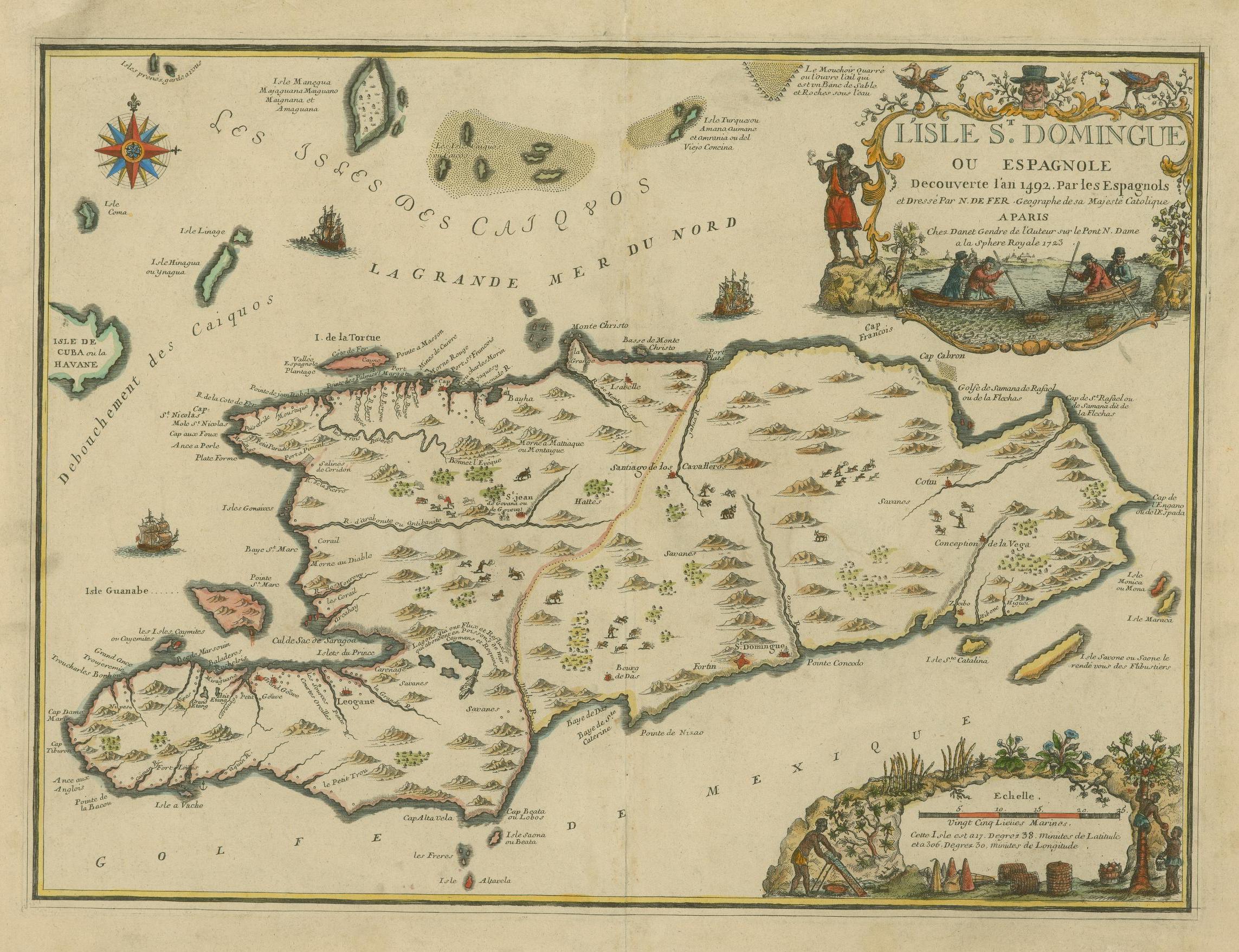
Blog #18 - What do we owe Haiti?
I started thinking about what the Haitian ambassador to the U.S., Raymond Joseph, had said here on this clip from the Rachel Maddow Show below about the impact of Haitian independence on both America and South America:
In summary, the U.S. greatly benefitted from Haiti's independence b/c they were France's last major foothold in the northern part of the western hemisphere, therefore it made little military sense for them to hold onto the Louisiana territory. So Thomas Jefferson and Congress worked out the deal to buy it for an insanely low bargain basement price of .03 cents an acre. Just think of all the benefits we reaped from the Louisiana Purchase.
For South America, several of the countries owe their independence to Simon Bolivar who used Haiti as a launching pad for his revolutionary army. For instance, here's an excerpt from a Bolivar letter written December 23,1822; concerning the strength of Haiti, and the vulnerability of Colombia:
"I then cast my eyes over the endless coastline of Colombia, threatened by the fleets of every nation, by the Europeans whose colonies surround us, and by the Africans of Haiti whose strength is mightier than primeval fire."
Another quote written March 11, 1825; concerning the military tactics Bolivar wished to implement at this stage of the war against Spain:
"The wars in Russia and Haiti should be our model on some points, but without the terrible type of self-destruction that those countries adopted." 1
Without the sacrifice and support of the Haitian people, the countries in South America and the U.S. may not have become as prosperous or gained their independence as quickly throughout history. If the Spanish hadn't been hassled by the revolutionary movements, they might have been able to bother the United States or reconquer Mexico.
Questions:
1. Do the countries of America and Peru, Colombia, Venezuela, and Bolivia owe Haiti anything? Why or why not?
150 words, due Friday 4/16 by class time.
If interested, the Haitian Embassy in D.C. is sponsoring an art contest to celebrate its Flag Day on May 18. Click here for more info: http://www.haiti.org/files/CALL%20FOR%20ARTISTIC%20CONTRIBUTION.pdf
Sources:
1. http://www.historyvortex.org/HaitianRevolutionImpactSpanishCaribbean.html Haitian Revolution and its Impact on the Spanish Revolution.
In summary, the U.S. greatly benefitted from Haiti's independence b/c they were France's last major foothold in the northern part of the western hemisphere, therefore it made little military sense for them to hold onto the Louisiana territory. So Thomas Jefferson and Congress worked out the deal to buy it for an insanely low bargain basement price of .03 cents an acre. Just think of all the benefits we reaped from the Louisiana Purchase.
For South America, several of the countries owe their independence to Simon Bolivar who used Haiti as a launching pad for his revolutionary army. For instance, here's an excerpt from a Bolivar letter written December 23,1822; concerning the strength of Haiti, and the vulnerability of Colombia:
"I then cast my eyes over the endless coastline of Colombia, threatened by the fleets of every nation, by the Europeans whose colonies surround us, and by the Africans of Haiti whose strength is mightier than primeval fire."
Another quote written March 11, 1825; concerning the military tactics Bolivar wished to implement at this stage of the war against Spain:
"The wars in Russia and Haiti should be our model on some points, but without the terrible type of self-destruction that those countries adopted." 1
Without the sacrifice and support of the Haitian people, the countries in South America and the U.S. may not have become as prosperous or gained their independence as quickly throughout history. If the Spanish hadn't been hassled by the revolutionary movements, they might have been able to bother the United States or reconquer Mexico.
Questions:
1. Do the countries of America and Peru, Colombia, Venezuela, and Bolivia owe Haiti anything? Why or why not?
150 words, due Friday 4/16 by class time.
If interested, the Haitian Embassy in D.C. is sponsoring an art contest to celebrate its Flag Day on May 18. Click here for more info: http://www.haiti.org/files/CALL%20FOR%20ARTISTIC%20CONTRIBUTION.pdf
Sources:
1. http://www.historyvortex.org/HaitianRevolutionImpactSpanishCaribbean.html Haitian Revolution and its Impact on the Spanish Revolution.
Friday, March 26, 2010
Blog #17 - The Fairness of Taxes
In France's "ancien regime", the first (clergy) and second (nobles) estates paid little to no taxes (2% total taxes for the first estate, and 1% for the second) before the French Revolution in 1789. They also had special privileges and had some influence and power, but the nobles especially were afraid of losing their special place in society.
The third estate was a varied group of people. They included middle class bankers, lawyers, merchants and manufacturers. It also included doctors, journalists and professionals, but the majority of the third estate was made up of rural peasants and urban workers (the poorest) and urban unemployed. The third estate had few special privileges and had to pay the majority of the taxes (estimated 97% total taxes).
These inequalities, in addition to France's soaring national debt and the skyrocketing price of food, contributed to the revolution.
In America since 1913, we have had a progressive income tax - those who earn more pay the most. Back then, only incomes over $4,000 ($86,500 in 2010 dollars) were taxed (which applied to about 5% of the country).
During World War 2, the middle class really became included in the income tax in order to help pay for the huge price of the war.
But, the way our tax burden is distributed is much different than pre-revolutionary France. For instance, the lower class, or those who make less than $25-30,000 a year (for a family of four) pay about 5% of total tax amount collected every year by the IRS though they make up 15-20% of the population.
The American middle class makes up 60-70% of the population and pays around 45% of the total tax amount. The middle class earns between $30,000 - $200,000 / year.
An argument for taxes from the Brookings Institute. Supreme Court Justice Oliver Wendell Holmes jr. has said, "I like paying taxes. With them I buy civilization."
The wealthiest 10% of Americans (those who earn over $200,000), because of our progressive tax system, pay about half of the amount collected by the IRS. That amount (50%), and in fact all of the amounts, have fluctuated depending upon the strength or weakness of the economy.
Currently, like France in 1789, our American government owes over $12 trillion to foreign investors and future payments to Social Security and Medicaid and Medicare.
1. Why do you think the French tax system was set up that way?
2. Do you think our current tax system is fair with the wealthiest Americans paying half of the tax amount collected every year? Why or why not?
3. What would you do to our tax system today to modify it? (For instance, do you think our government spends too much money on social services / the military / other stuff? Would you lower taxes (and forbid it to borrow any money unless in an emergency) to force the government to spend less? Or, what about a flat tax where everybody pays the same percentage/rate?) Why?
150 words minimum total (not 150 words per question). Due Monday, March 29.
The third estate was a varied group of people. They included middle class bankers, lawyers, merchants and manufacturers. It also included doctors, journalists and professionals, but the majority of the third estate was made up of rural peasants and urban workers (the poorest) and urban unemployed. The third estate had few special privileges and had to pay the majority of the taxes (estimated 97% total taxes).
These inequalities, in addition to France's soaring national debt and the skyrocketing price of food, contributed to the revolution.
In America since 1913, we have had a progressive income tax - those who earn more pay the most. Back then, only incomes over $4,000 ($86,500 in 2010 dollars) were taxed (which applied to about 5% of the country).
During World War 2, the middle class really became included in the income tax in order to help pay for the huge price of the war.
But, the way our tax burden is distributed is much different than pre-revolutionary France. For instance, the lower class, or those who make less than $25-30,000 a year (for a family of four) pay about 5% of total tax amount collected every year by the IRS though they make up 15-20% of the population.
The American middle class makes up 60-70% of the population and pays around 45% of the total tax amount. The middle class earns between $30,000 - $200,000 / year.
An argument for taxes from the Brookings Institute. Supreme Court Justice Oliver Wendell Holmes jr. has said, "I like paying taxes. With them I buy civilization."
The wealthiest 10% of Americans (those who earn over $200,000), because of our progressive tax system, pay about half of the amount collected by the IRS. That amount (50%), and in fact all of the amounts, have fluctuated depending upon the strength or weakness of the economy.
Currently, like France in 1789, our American government owes over $12 trillion to foreign investors and future payments to Social Security and Medicaid and Medicare.
1. Why do you think the French tax system was set up that way?
2. Do you think our current tax system is fair with the wealthiest Americans paying half of the tax amount collected every year? Why or why not?
3. What would you do to our tax system today to modify it? (For instance, do you think our government spends too much money on social services / the military / other stuff? Would you lower taxes (and forbid it to borrow any money unless in an emergency) to force the government to spend less? Or, what about a flat tax where everybody pays the same percentage/rate?) Why?
150 words minimum total (not 150 words per question). Due Monday, March 29.
Saturday, February 27, 2010
Blog #16 - Descent into Fascism in the United States?
Could something like Japan, Germany and Italy's descent into fascism happen in America today?
If you remember the circumstances when these three countries fell under fascism's spell, the following was happening in these 3 countries:
1. A major economic depression put amazing stress upon these three countries' economic systems, causing massive unemployment, inflation, and extreme stress upon their banking systems;
2. Weak democracies were unable to meet the demands upon its organization;
3. Strong nationalist feelings helped make the people in their country ready for a leader (Hitler, Mussolini) who would exploit the country for his own personal sake;
4. In each country, a strong military presence - either with generals taking over the gov't. in Japan or the rebuilding of Germany's industry through an increase in military forces - allowed each country to channel their aggression and spread their imperialist demands;
(I may think of some more things between now and Thursday, but let's go with these four for now).
Your questions:
Could these things occur in America? Are these things already occuring in America right now? Why or why not?
150 words minimum. Due Thursday, March 4
Author Sinclair Lewis wrote about this exact scenario in his novel in It Can't Happen Here in 1935. http://gutenberg.net.au/ebooks03/0301001h.html Here's a link to the novel online.
If you remember the circumstances when these three countries fell under fascism's spell, the following was happening in these 3 countries:
1. A major economic depression put amazing stress upon these three countries' economic systems, causing massive unemployment, inflation, and extreme stress upon their banking systems;
2. Weak democracies were unable to meet the demands upon its organization;
3. Strong nationalist feelings helped make the people in their country ready for a leader (Hitler, Mussolini) who would exploit the country for his own personal sake;
4. In each country, a strong military presence - either with generals taking over the gov't. in Japan or the rebuilding of Germany's industry through an increase in military forces - allowed each country to channel their aggression and spread their imperialist demands;
(I may think of some more things between now and Thursday, but let's go with these four for now).
Your questions:
Could these things occur in America? Are these things already occuring in America right now? Why or why not?
150 words minimum. Due Thursday, March 4
Author Sinclair Lewis wrote about this exact scenario in his novel in It Can't Happen Here in 1935. http://gutenberg.net.au/ebooks03/0301001h.html Here's a link to the novel online.
Tuesday, February 16, 2010
Blog#15 - Morality of the Opium Wars
This blog has been one of the hardest to write b/c it seems that wherever I look to for info - books, online sources, etc. - they have pretty much the same stuff. Part of me wonders if this is because few Westerners have written extensively on this subject. Another reason might be that there may be few Chinese sources available to the West given the current nature of China's closed society. If that is the case, maybe what is happening is that when historians write about this subject, they repeat the same info over and over.The basics of the Opium Wars (1839-42) seem to be that:
1. The British East India Company needed tea, silk, porcelain and other goods from China;
2. China wasn't very interested in Western goods - basically, "thanks, but no thanks."
3. This created an imbalance of trade (or trade deficit) with the British and the Chinese.
*The Chinese were used to being paid in silver from earlier dealings w/ the Spanish and the Portugeuse, but the British were on the gold standard and had to buy their silver from other European countries at an increased price.
4. In order to solve this trade deficit, Britain began importing opium from Indian traders in Calcutta. However, the Chinese emperor in 1729 banned the sale and smoking of opium, so the British had to resort to smuggling it.
5. In the 1760s, the British EIC gained a monopoly over the production and monopoly of opium, cutting out the trader in Calcutta (in essence, paying the Indian farmers to grow it, buying it from them, and then smuggling it into China when purchasing tea and silk).
6. When the Chinese struck back and destroyed EIC warehouses full of opium, the EIC cried foul to the British government who then attacked the Chinese for daring to protect their people from drugs (this last part is my own emphasis / sarcasm).
7. After the Chinese lost this series of battles, they were forced to sign unequal treaties and give up Hong Kong as well.

Here are some of my questions that kept popping up as I read through the material:
1. Why did the British sell opium to the Chinese? Was it just the Chinese or was it the Indians and other SE Asian peoples as well? Were some British addicted as well?
2. Why did the British government go to war with the Chinese when the Chinese were trying to stop this awful trade from addicting their people? Didn't this mean that the British gov't. approve of this trade, and by extension approve of addicting thousands of people to opium?
3. Why couldn't the Chinese stop the British from smuggling in the drug? What were the Chinese officials' roles in allowing or stopping the trade?
4. Was this opium war really a war over getting access to the Chinese markets so that the British (and other Western nations later) could sell their cheap goods? I ask this b/c of the terms of the Treaty of Nanking signed in 1842; the British didn't demand to sell more opium, they asked for access to more ports (including Hong Kong) and better trading rights.
So, when the whole thing is said and done, what can we learn from this? (Pick two of the following questions to answer)
1. Should a government support a company's actions even if it's actions are illegal? Why or why not?
2. Should the British government be responsible today for its actions 170 years ago? Why or why not? It gave Hong Kong back to China at the end of the "100 year lease" in 1997
3. If the British East India Company still existed today, should it be held responsible for its actions? Why or why not? What could be done to it?
4. Can you think of any examples in recent times when a country has gone to war for economic / business reasons? Explain.
200 words, due Tuesday, February 22, 2010.
http://afe.easia.columbia.edu/special/china_1750_opium.htm - Asia for Educators: Opium Wars and Foreign Encroachment
Thursday, February 4, 2010
Blog #14 - Was Tsar Nicolas II the Wrong Man for the Time?
In our article about Tsar Nicholas II, the last Russian tsar, we discussed the article's title of whether he was the wrong man for the time (the original Newsweek article).Some of the class thought that Nicholas was the wrong man for the time b/c:
1. He wasn't very assertive or a strong leader without the confidence or responsibility needed of a tsar - he knew he was going to be tsar eventually, so he should have been learning how to be one even if his father didn't want to teach him;
2. He wasn't active enough during his reign (1894-1917) to stop the swirling forces of modernism nor did he make any real lasting changes for the Russian people - the Duma wasn't a true assembly;
3. Nicholas thought that the bad stuff that happened to him - battle losses, bad advice, deaths in the family, etc. - was God's will, and that we saw in our video, "The Last of the Czars," that he compared himself to Job, God's true believer who endured great suffering.
Others felt that Nicholas wasn't the wrong man for the time (and wondered if anybody could have saved the Russian empire at that time):
1. When he took over the throne in 1894 after his father's untimely death, he was unprepared (mainly b/c his father, Alexander III, thought Nicholas was too soft 2);
2. He and his family were murdered in July 1918 and could not help prevent the Bolsheviks from winning the civil war (as preposterous as it sounds, biographer Robert Massie seems to blame Nicholas for Nazism and WW2, the Cold War and its hot wars like Korea and Vietnam in the last paragraph of his Newsweek essay - see below):
After their murder, the Russian Revolution continued its brutal course. Then
came the rise of Nazism in Germany, the second world war, the subsequent
expansion of communism over half of the globe, the cold war and all its little
hot wars. In the end, it was the destruction of Nicholas, a ruler unable to cope
with modern times, that led to some of the decisive political events--and worst
horrors--of a bloody century (Robert Massie, "The Wrong Man for the Time", Newsweek, July 20, 1998).
3. Nicholas inherited an angry, divided and backwards country from his father, and he wasn't a miracle worker;

4. The tsar's empire (and maybe all empires in general) were old fashioned, and the forces of history like nationalism were tearing it apart;
5. By 1917, the Russian people were at the breaking point w/ all of the food shortages, crushed revolts and failed war effort - it was just a matter of time before a revolution occurred.
Tell me your opinion in 150 words by Monday, February 8.
Sources:
1. A review of Robert Massie's book, Nicholas and Alexandra (2000).
2. Link to info on Nicholas II: http://www.physicsdaily.com/physics/Nicholas_II_of_Russia
3. Link to Alexander Palace: http://www.alexanderpalace.org/palace/index.html
4. Detailed timeline for 1917's Russian Revolution: http://www.emayzine.com/lectures/russianrev.html
Tuesday, January 26, 2010
Blog #13 - Choose one of these questions
With this imperialism / Great War unit, I decided to have you make up your own higher order thinking questions.
1. Why didn't Vicar tell the other guys (Trench, Willoughby, Jack) that he thought he saw Harry ride off after a spy?
2. Why would soldiers countinue to fight after they've what horror and damage that war can do? - Karen, Maddie, Eric
3. Why did King Leopold mistreat the people of the Congo if that might cause a rebellion? - Braxton
4. Why didn't any of the soldiers in the Great War rebel earlier because of the awful living conditions?
5. Do you think Vicar thought it was all right to kill a man if he prayed to God while doing it? -Kelly
6. Do you think there was a deeper meaning behind why Ethne decided to marry Jack? Maybe she felt bad for him becuase he was blind? Or maybe he was a last resort because Harry was surely gone by then? - Kelly
7. What was your first impression of shell shock? Did you think it was this severe? What were your reactions to it? Do you think stuff like this still happens today and did you ever know about such a thing until now? - Jithmi, Larry G., Maddie
8. Towards the end of Four Feathers, Jack and Ethne are outside talking by a carriage after Harry's visit to his house. It is thought that Jack broke up with Ethne at that point. Why would he decide to do that? - Nona
9. What influence do you think Siegfried Sassoon had on Wilfred Owen and his writing? Do you think Sassoon was liked or disliked by generals? Why? - Jithmi
10. What do you think America should have done during the Armenian Genocide in 1915? Was what they did a good response or could it have been better? Why? - Reanna
11. What would happen if the Turks were to take responsibility for the Armenian Genocide? - Andrea K.
12. Why would the British continue to drop so many shells at the Battle of the Somme when they had made so little progress? - Andrea K.
13. Why were nations like Germany so obsessed with gaining land in Europe when they already had overseas colonies in Africa? Did being a smaller nation have something to do with this? - Larry G.
14. Why couldn't soldiers speak their minds about how the war was going without getting punished? - Karen DLR
15. Why did soldiers like Sassoon go back to the war after being injured? - Maddie
16. Why do you think, even after the war had begun, secret agreements were being made, just like there had been at the beginning when countries tried to gain allies? - Lizzie
17. What do you think would of happened if America had been involved in World War 1 from the start, instead of trying to stay out of it? Do you think peace would of come faster? Or did America’s timing have to do more with it than the country itself? - Lizzie
18. Why might some countries be in favor for the treaties made during World War I and why might some countries be against them? - Emily H.
19. Why do you think that Serbia would choose to not agree to all the demands that Austria sent them, even if it meant avoiding a war and also saving lives and resources? - Emily H.
20. Why was the idea of imperialism so more influential then the idea of Enlightenment? - Eric
21. “ You smug-faced crowds with kindling eye,
who cheer when soldier lads march by,
Sneak home and pray you’ll never know
The hell where the youth and laughter go.” –Siegfried Sassoon, “Suicide in the Trenches”.
What do you think Siegfried poem has to say about the war in this poem? Why? - Alesha
22. Even though women couldn’t fight in the Great War, do you think women are valuable as soldiers now? Support your answer. - Alesha
23.
Please pick one of the questions above (that isn't your own) and answer it to the best of your ability in 150 words. Due Friday, Jan. 29, 2010.
1. Why didn't Vicar tell the other guys (Trench, Willoughby, Jack) that he thought he saw Harry ride off after a spy?
2. Why would soldiers countinue to fight after they've what horror and damage that war can do? - Karen, Maddie, Eric
3. Why did King Leopold mistreat the people of the Congo if that might cause a rebellion? - Braxton
4. Why didn't any of the soldiers in the Great War rebel earlier because of the awful living conditions?
5. Do you think Vicar thought it was all right to kill a man if he prayed to God while doing it? -Kelly
6. Do you think there was a deeper meaning behind why Ethne decided to marry Jack? Maybe she felt bad for him becuase he was blind? Or maybe he was a last resort because Harry was surely gone by then? - Kelly
7. What was your first impression of shell shock? Did you think it was this severe? What were your reactions to it? Do you think stuff like this still happens today and did you ever know about such a thing until now? - Jithmi, Larry G., Maddie
8. Towards the end of Four Feathers, Jack and Ethne are outside talking by a carriage after Harry's visit to his house. It is thought that Jack broke up with Ethne at that point. Why would he decide to do that? - Nona
9. What influence do you think Siegfried Sassoon had on Wilfred Owen and his writing? Do you think Sassoon was liked or disliked by generals? Why? - Jithmi
10. What do you think America should have done during the Armenian Genocide in 1915? Was what they did a good response or could it have been better? Why? - Reanna
11. What would happen if the Turks were to take responsibility for the Armenian Genocide? - Andrea K.
12. Why would the British continue to drop so many shells at the Battle of the Somme when they had made so little progress? - Andrea K.
13. Why were nations like Germany so obsessed with gaining land in Europe when they already had overseas colonies in Africa? Did being a smaller nation have something to do with this? - Larry G.
14. Why couldn't soldiers speak their minds about how the war was going without getting punished? - Karen DLR
15. Why did soldiers like Sassoon go back to the war after being injured? - Maddie
16. Why do you think, even after the war had begun, secret agreements were being made, just like there had been at the beginning when countries tried to gain allies? - Lizzie
17. What do you think would of happened if America had been involved in World War 1 from the start, instead of trying to stay out of it? Do you think peace would of come faster? Or did America’s timing have to do more with it than the country itself? - Lizzie
18. Why might some countries be in favor for the treaties made during World War I and why might some countries be against them? - Emily H.
19. Why do you think that Serbia would choose to not agree to all the demands that Austria sent them, even if it meant avoiding a war and also saving lives and resources? - Emily H.
20. Why was the idea of imperialism so more influential then the idea of Enlightenment? - Eric
21. “ You smug-faced crowds with kindling eye,
who cheer when soldier lads march by,
Sneak home and pray you’ll never know
The hell where the youth and laughter go.” –Siegfried Sassoon, “Suicide in the Trenches”.
What do you think Siegfried poem has to say about the war in this poem? Why? - Alesha
22. Even though women couldn’t fight in the Great War, do you think women are valuable as soldiers now? Support your answer. - Alesha
23.
Please pick one of the questions above (that isn't your own) and answer it to the best of your ability in 150 words. Due Friday, Jan. 29, 2010.
Saturday, January 23, 2010
Blog 12 - Armenian Genocide and Turkey's continual denial
We've been reading about the Armenian genocide and Turkey's continual denial of their complicity in that genocide. The Ottoman government, at war with Russia at the time, saw the Armenians as an internal threat, spies, and sabotuers. Once the majority of the Armenians were exiled to Syria or killed by the end of 1915, the Young Turk officials began their official denials. Some of the major issues at stake (BBC Online http://news.bbc.co.uk/2/hi/6045182.stm):
1. The number of Armenians killed: Armenians say that 1.5 million had perished in the sands of Syria while the Turks say that only 300,000 died between 1915-1923.
2. Were the killings systematic? Many governments, historians and the Armenians believe that the massacres were part of an organized plot done by the Turkish government during WW1, however, Turkey contends that many Muslims died in the "turmoil of war" as well.
3. The trials after WW1 ended up with one Turkish official hanged and another thrown in jail, but the big 3 Young Turks tried "in absentia" - not present -since they had run away to Germany.
For the U.S.'s part, we read about Ambassador Henry Morgenthau's efforts to persuade President Wilson to pressure the Ottomans/Young Turks to end the massacres or to get the Germans to stop the Turks. Wilson would do neither. In 1916, both the House and Senate passed resolutions saying that they were disturbed by the reports of mass Armenian killings and wanted to have a day where Americans should show their solidarity with the Armenian people and work to raise relief funds. Of course, in America, 1916 was an election year, and in a tough economy, Wilson campaigned to keep America out of that European mess.
At least 20 countries around the world since this time period have passed resolutions to express sorrow and sympathy (Argentina, Belgium, Canada, France, Italy, Russia and Uruguay), held prayer days and have officially recognized the Armenian genocide, yet America hasn't. In 1984, the U.S. House of Representatives passed a resolution that called for the President to recognize a National Day of Remembrance of Man's Inhumanity to Man with specific reference to the Armenian genocide. The day was April 24th, the day that the Turkish gov't. arrested 50 Armenian intellectuals and leaders who were then later executed - a day that the Armenians recognize as the offical start of the Armenian genocide.

In recent years, Turkey has denied the U.S. any use of its bases for the invasion of Iraq in 2003. Also, Turkey has urged the U.S. gov't. to block a Congressional vote in 2007 that would recognize the Armenian genocide, and so the House Foreign Relations Committee stalled the bill.
So, why would Turkey continue to deny responsibility for the genocide? 150 words minimum. Due Monday, January 25.
Read the websites at the bottom of this Wikipedia page for links to pages that explain Turkey's point of view.
Copy of the genocide map from the Armenian National Institute: http://www.armenian-genocide.org/map-full.html
Thursday, January 14, 2010
Subscribe to:
Posts (Atom)