Thursday, October 16, 2014

Blog #29 - Inside Mecca

Well, we've finished the National Geographic special, Inside Mecca, and I hope that you were able to learn something from it.  I find it absolutely a fascinating field trip that we have been able to take - via video, obviously - into the holiest place in the Muslim world, a place that only Muslims are allowed to go. 

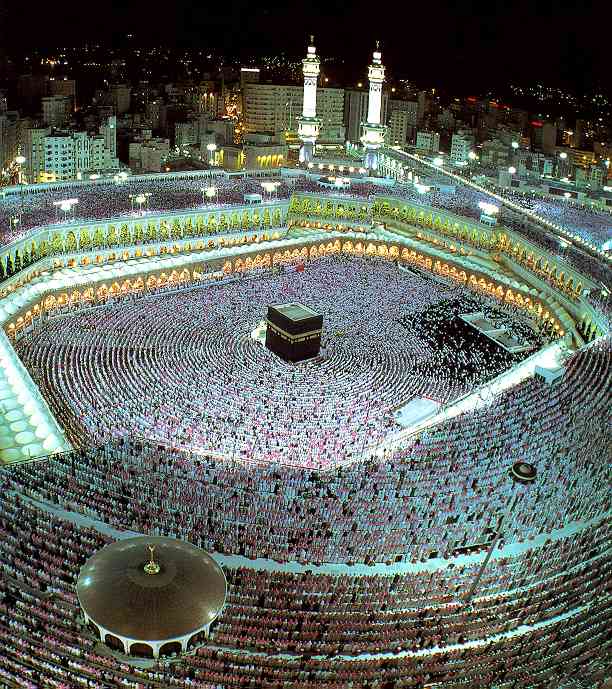
The Kaaba, the building that houses the Black Stone, originally built by Adam (of Adam and Eve), and rebuilt by Abraham almost four thousand years ago is an amazing sight to see.  It is probably one of the most recognizable holy places in the world, and now you know its significance. 

http://images.fanpop.com/images/image_uploads/Kaaba-islam-172968_612_689.jpg
As part of the hajj, we got to see the three pilgrims on their spiritual journey and discover what Islam means to them.  It is important, with the way some Americans view Muslims today, I believe, that there is a balanced portrait of Islam and what the religion is.  We cannot base our views upon the actions of a tiny group of extremists. 

So, in 200 words or more, tell me what insights you have gained from watching Inside Mecca.  Thanks.

Due Monday, October 20 by class. 

Tuesday, October 7, 2014

Blog #28 -- Are We Rome?

"Imagine a small agrarian republic that gradually grows into the world’s greatest military and cultural superpower. Over time, as public power is concentrated in the hands of a relatively small group of wealthy private citizens, that ruling elite falls increasingly out of touch with the world beyond its borders. Those borders, porous and steadily expanding, become ever more difficult to manage and defend. Faltering under the growing burden of policing them, the military is forced to recruit considerable mercenary support to handle conflicts that might arise, as well as those already under way. Eventually, losing its grip on power both internally and externally, the superpower enters a state of accelerating decline, ultimately fading into a shadow of its former glory." - "As the Romans Did", The Atlantic Monthly, June 22, 2007.

Some people have compared America to Rome and the different stages that it has gone through, from its earliest days as a small farming republican democracy that grew steadily into the world's largest military and cultural superpower of its time.  America had done this in a shorter amount of time period, and in some respects still maintains its military and cultural superiority.  We have the biggest armed forces and the most powerful economy in the world, and our culture can be found throughout the world with McDonald's, Subway, and Coke. 

In some ways, according to author John Murphy, America and Rome are very similar. For instance:
 - both America and Rome have an exaggerated sense of self - importance, thinking that we are the greatest nation / empire in the world;
 - our military is stretched across the world / empire and also alienated from the regular people in society;
 - we both struggle to police / protect our borders from immigration / foreign invasions;
 - we idealize our founders as someone to look up to;
 - both Romans and Americans tend to be shortsighted and don't think down the road and some things can tend to bite them in the end;
 - Rome and America have tended to be very multicultural and built on the work of immigrants;
 - America and Rome have a huge gap between the rich and poor meaning that the rich are very rich and the poor are very poor.

Some things that make America different than Rome however, are:
 - Romans had slavery throughout its entire history, while America outlawed it 150 years ago;
 - America has seen so much change in the last 150 years with regards to industrial, technological change than Rome had experienced in its entire lifetime;
 - America's free land give aways (courtesy of stealing from the Indians) actually worked unlike the Gracchus brothers' reforms.

In your own words, discuss the similarities and differences between Rome and America.  You can come up with some of your own.

Due Thursday by class.  200 words minimum.  
Friday, September 26, 2014

Blog #27 - Confucian Values in America

We've read about Chinese philosopher, Confucius, and his five relationships.  These relationships emphasized both governmental and personal morality, and proper relationships between the governed and the ruler.  His teachings gained dominance over Legalism, Daoism and Buddhism during the Han Dynasty (200 B.C.E. - 200 C.E.), and most of his writings are known in the book, The Analects of Confucius

We looked at the five relationships that he felt built the foundation of a moral society:
1. Ruler to ruled
2. Father to son
3. Older brother to younger brother
4. Husband and wife
5. Friend to friend

In each relationship, there is an obligation to one another - the one in the superior relationship has to be an example of proper behavior while the person in the lower relationship must provide obedience.  Much of this is based upon an emphasis on the family or filial piety.  And, unlike American individualism, Confucius believed that family and the good of society should come before the interests of society. 

In his teachings, he emphasized setting a moral example for others.  He felt that this was key above all else, especially for rulers: to lead by example instead of imposing a set of rules.  So, if you'd want your people to save money, the rulers should also do the same thing and be careful how they spend their tax money. 

So, in America, my question for you is:
1. Where do you see Confucian values?  Elaborate w/ specifics. 
or do the opposite - Which parts of American life could use some Confucian values?  Why? 

Your comment should be a minimum of 200 words and is due by Thursday, Oct. 2 by the beginning of class. 

Monday, September 15, 2014

Crash Course World History Videos

Here are the awesome review videos, some from class, others we haven't seen:

Agricultural Revolution - http://youtu.be/Yocja_N5s1I

Indus River Valley - http://youtu.be/n7ndRwqJYDM

Mesopotamia - http://youtu.be/sohXPx_XZ6Y

Egypt- http://youtu.be/Z3Wvw6BivVI


Monday, November 8, 2010

Pictures of the classes - Mayan Archeology

<>
Looking at Chichen Itza's pyramid, El Castillo
What was that sinkhole used for?

This wall is carved in skulls!  EEK!
Can you believe Mr. W. climbed this thing?

The area of 1000 columns -stalae?


Wait!  We heard that the losers of this game get beheaded,
not the winners!   Did they play with a metal ball or a rubber ball?  What gives? 


Friday, October 22, 2010

Taj Mahal Virtual Tour

Check it out: http://www.taj-mahal.net/blackLarge.htm

Click the blue link "Explore the Taj Mahal" and it will open up a new window for you to explore this beautiful Mughal shrine to one emperor's wife.

Saturday, October 16, 2010

Blog #25 - What does this new Robin Hood movie mean?

Robin Hood comes from an 800 year old English legend about an outlaw in the Sherwood Forest in conflict with the Sheriff of Nottingham.  There has been evidence that the person the sheriff was battling was someone named "RobertHod" or "RobinHod."  Yet there are several example of a Robin Hood scattered across a hundred years or more, my guess is that they may have been inspired by the legend and borrowed the name.  According to the University of Rochester's (UK) website project on RH, references to an outlaw began appearing in chronicles of the times in the mid 1400s.

In the 1700s and 1800s, English writers began searching through their ancient history in order to find folk heroes (probably a sign of the growth of nationalism or love of one's country).  English historians have also tried to find out RH's true roots as well, and this website concludes:

"Despite the efforts of authors like P. Valentine Harris (see case 5), no verifiable Robin Hood emerged from the historical record. Today, most scholars accept Robin as a literary invention, based in part on other figures like Gamelyn and Fouke fitz Waryn, as well as real-life outlaws. Any search for the ideal Robin Hood, a dispossessed noble who robs from the rich to give to the poor, is doomed to failure. That Robin is a modern figure whose individual characteristics were added in different stages, which are roughly represented in this exhibit" (http://www.lib.rochester.edu/camelot/rh/RH%20Exhibit/pref.htm)


In the 1800s, he appeared in plays, songs, and operas as well as novels.  Because of the lack of solid facts on RH, it appears that artists have fit him into almost any context that they have wanted to, placing him within the Anglo-Saxon invasion or in today's movie version, a returning archer from the Crusades.  An author named Pierce Egan in 1838 wrote a series of adventures that added Robin's Merry Men to the myth.  Sir Walter Scott also included RH in his classic, Ivanhoe (1820). 


The two most recent American movies Robin Hood: Prince of Thieves (1991) with Kevin Costner in the lead role along w/ Morgan Freeman and Alan Rickman.  The other was Mel Brooks' farce, RH: Men in Tights (1993) which had its best moment when Cary Elwes, as Robin Hood, cracked, "unlike other Robin Hoods, I can speak with an English accent."  Costner's portrayal of RH was criticized for losing his lame British accent half way through the movie.  The first movie goes for serious drama and action and includes a Moor from the Crusades (Morgan Freeman's character), while the other movie shreds the Robin Hood convention with tons of jokes. 

Your questions: 
1. Why do you think a country like Britain that had a strong tradition of law and loyalty to the monarch would honor such a popular rebel hero who stole from the rich and gave to the poor? 
2. The current RH movie that we just watched could be viewed in the time period that it was made: Britain had withdrawn from the Iraq War by 2008, their once popular Prime Minister (Tony Blair) was booted out of office for his decisions to go to war and among other things like a bad economy.  Do you think that the director of this current RH, Ridley Scott, made the movie with the intentions of using some of the movie events to reflect current events in Britain (King Richard returning from a "failed crusade" as Robin called it = leaving Iraq; King Richard dying before returning home = Tony Blair losing his job; terrible economy, poor and starving people = disastrous bank failures and economic crash in 2008)?  Why or why not? 

These are some deep questions, so if you need help, ask your parents. 

Due Tuesday, October 19th.  200 words minimum. 

Tuesday, October 5, 2010

BLOG #24 - What did you learn from Inside Mecca?


Well, we're almost done watching the National Geographic special, Inside Mecca, and I hope that you were able to learn something from it.  I find it absolutely a fascinating field trip that we have been able to take - via video, obviously - into the holiest place in the Muslim world, a place that only Muslims are allowed to go. 

The Kaaba, the building that houses the Black Stone, originally built by Adam (of Adam and Eve), and rebuilt by Abraham almost four thousand years ago is an amazing sight to see.  It is probably one of the most recognizable holy places in the world, and now you know its significance. 


As part of the hajj, we got to see the three pilgrims on their spiritual journey and discover what Islam means to them.  It is important, with the way some Americans view Muslims today, I believe, that there is a balanced portrait of Islam and what the religion is.  We cannot base our views upon the actions of a tiny group of extremists. 

So, in 150 words or more, tell me what insights you have gained from watching Inside Mecca.  Thanks.
Due Thursday, October 7th. 

Thursday, September 23, 2010

Blog #23 - How has life improved for women since the Middle Ages?

At first glance, like we discussed on Wednesday, this may seem like an easy question.  Of course women's lives / rights / opportunities have improved since the Middle Ages.  That was 1,000 years ago!   Women have rights now - they can choose who they marry and they can also get a divorce; they have property rights - both own and inherit; they can vote; they aren't banished to a convent if they have premarital sex or an unplanned pregnancy.  These are just a few things that I can list right now while I type this up - if I did a comprehensive list, it would take me days. 

But let's focus on a few things that are less subtle and harder to banish with well-meaning laws and readjusting men's attitudes towards women.   Think about the women in your lives - your mothers, grandmothers, older sisters, aunts, and friends - and think about the pressure that they live with. 

They have to balance motherhood with a career.  Sometimes, women have to choose between the two and it's rare that men are forced to choose.  It's rare (but becoming more and more common with the bad economy today) to see a stay-at-home dad. 

Is chivalry dead?  The age-old idea of treating women with special care has seemed to disappear in the age of feminism / equality.  How many times do you see a man open a door for a woman?  Give up their chair or seat in a crowded area?  Treating women with respect instead of as objects or referring to them in derogatory terms?  Is this whole idea of being a gentleman dead? 

Why do women still earn less, on average, than men?   When you have laws that are supposed to eliminate workplace discrimination, why does this still happen?  In the past, women were paid less b/c their income was seen as a second income (the husband's was primary) so any money that the woman got was "extra" $$.  Also, women could get pregnant so the costs of "retraining" a new worker to replace her came out of her wages. 

This pair of pants from Abercrombie Kids is called
"Cute butt sweatpants"
What about the damaging media images for girls today?   Almost everywhere you go, TV shows, print ads, and videos portray the "ideal" women as someone who is 5'8 and up, skinny and possibly big-breasted.  The vast majority of women don't look like this, nor could they no matter how hard they diet, exercise, etc.  Studies show that 5-7% of American women are genetically born to be this ideal size.  But, what may be worse is a trend that I have noticed in the past ten years or so (since I have a 13 year old daughter) is one in which younger and younger girls are given opportunities to dress in styles that aren't age appropriate.  For instance, some popular brands are too tight or just flat out inappropriate for young girls. 

O.k., maybe I sound like an old fuddy duddy, but do these media messages tell girls that it's o.k. to be more sexually attractive at a younger age, especially when they're not ready to handle that kind of attention?  Or am I just misreading this stuff?

Take a look for yourself - http://www.media-awareness.ca/english/issues/stereotyping/women_and_girls/

So, the question for you is:
 - Yes, things have changed for the better for women, especially when comparing their lives to the Middle Ages.  But, where do you think our society can improve on attitudes /expectations, etc. for girls and women?   Explain why. 

Due Monday, Sept. 27.  150 words minimum. 

Sunday, May 23, 2010

Blog #22 - Free speech for soldiers?

We saw in the film, The Great War, Pt. 5, "The Mutiny", how Siegfried Sassoon was dealt with when he spoke his mind about the war and the change it had undergone by 1917 into one of carnage and conquest. 
He published this statement against the war and then was sent off to Craiglockhart (the sanitarium). 

"I am making this statement as an act of willful defiance of military authority, because I believe that the War is being deliberately prolonged by those who have the power to end it. I am a soldier, convinced that I am acting on behalf of soldiers. I believe that this War, on which I entered as a war of defence and liberation, has now become a war of aggression and conquest. I believe that the purpose for which I and my fellow soldiers entered upon this war should have been so clearly stated as to have made it impossible to change them, and that, had this been done, the objects which actuated us would now be attainable by negotiation. I have seen and endured the sufferings of the troops, and I can no longer be a party to prolong these sufferings for ends which I believe to be evil and unjust. I am not protesting against the conduct of the war, but against the political errors and insincerities for which the fighting men are being sacrificed. On behalf of those who are suffering now I make this protest against the deception which is being practised on them; also I believe that I may help to destroy the callous complacency with which the majority of those at home regard the contrivance of agonies which they do not, and which they have not sufficient imagination to realize." 1

One thing to remember is that Sassoon went back on his own to go fight with his men, not necessarily b/c he regained his faith in what he was fighting for. 

One recent example of how free speech for active duty soldiers was being tested was in 2006 when anti-war groups like MoveOn.org began recruiting soldiers to lobby their Congressman to push for a time table to withdraw from Iraq. http://www.nysun.com/national/active-duty-gis-being-recruited-to-lobby-congress/42334/   Part of the petition that the 213 active duty soldiers had signed (as of October 26, 2006) stated:
     "As a patriotic American proud to serve the nation in uniform, I respectfully urge my political leaders in Congress to support the prompt withdrawal of all American military forces and bases from Iraq."


Something like this (a petition to Congress) had been done during Vietnam and news of this had inspired some of the active duty soldiers to create a group to join w/ MoveOn and solicit names.  In the article, a spokesperson for the Pentagon stated that it has no problem with members of the military contacting their Congressman personally as long as they don't claim to speak on behalf of the entire military or their unit:

"The members of the Armed Forces are free to communicate with their members of Congress in a lawful manner that does not violate the Uniform Code of Military Justice. In regards to the media teleconference, our position is that members of the Armed Forces that choose to speak to the press in their private capacity may do so, but must not do so in uniform and must make clear that they do not speak on behalf of their military unit, military service, or the Department of Defense unless they are authorized to do so"

However, when a soldier's free speech interferes with his ability to do his duty like Lt. Ehren Watada, the first military officer to refuse to fight in Iraq, as he faced a court martial at Fort Lewis, Washington in 2007. 3  He spoke at a veterans' national convention group called Veterans for Peace in Seattle and publicly refused to serve in the Iraq war b/c he deemed it morally wrong and illegal. 

The U.S. Army court-martialed him and it ended in a mistrial, and an attempt at a 2nd court martial was blocked by a federal judge as double jeopardy, a right found in the 5th Amendment (which means being found guilty of the same crime 2x, though I don't know how that's technically possible since the first trial didn't find him guilty of anything).  Lt. Watada's lawyers apparently tried to put the Iraq war on trial (examining the legality and morality of it vs. Lt. Watada's refusal to serve) and almost all of the lieutenant's character witnesses were tossed as well for being irrelevant. 

Here's Fox News' Michelle Malkin's take on Watada's mistrial in 2007: http://michellemalkin.com/2007/02/07/the-lefts-definition-of-a-herobreaking-mistrial-in-watada-case/

This whole fiasco ended when the Dept. of Justice eventually dropped the case against Lt. Watada in May 2009, and the Army accepted his letter of resignation at the end of Sept. 2009.  But his case brings up several difficult issues:

1. Do soldiers have the right and obligation to resist an order they believe is immoral? Why or why not?

2. We have established that soldiers have some form of free speech.  When that speech crosses the line into refusal to obey orders or criticize the commander / President (remember General MacArthur in the Korean War example I gave last week), then that's another issue.  Do you agree with this concept of free speech for soldiers?  Why or why not? 

Due Monday, May 24.  150 words minimum. 


Sources:
1. http://www.oucs.ox.ac.uk/ww1lit/education/tutorials/intro/sassoon/declaration.html Oxford's Siegfried Sassoon poetry collection.
2. PBS's The Great War website link page http://www.pbs.org/greatwar/resources/web.html
3. http://www.indybay.org/newsitems/2007/01/05/18344326.php Lt. Watada's court martial
4. Ehren Watada's story at http://www.couragetoresist.org/x/content/blogcategory/22/39/