After watching the BBC's The Great War Diaries, Part One, we discussed some main themes that were central to the film. What I would like you to do is
pick three main themes from the film and discuss how it shows them using specific examples from the film. I've included the film below in case you forgot.
This blog should be at least 250 words and is part of your final exam. It is due Wednesday, June 10, before class begins.
Friday, June 5, 2015


Thursday, May 28, 2015
Blog #34 - Red Rubber, White King, Black Death
So far throughout World History A and B, you have studied how Africa had grown as a multi-ethnic
continent with different tribes and thousands of languages before the
Europeans came to become the crossroads for trade and commerce like it
is today.
The northern African countries, the ones that have had the most interaction with Europe (good and bad) like Algeria, Morocco, Libya, Tunisia and Egypt are more economically advanced than their sub-Saharan brethren. Those countries that lie South of the Equator are the ones that we will focus on for most of our imperialism unit in Chapter 24 and revisit before the end of the semester.
The British and the French were the two biggest colonizers of sub-Saharan Africa, but the Belgians, Germans, Dutch and Portuguese also carved up the continent after 1800. This period is known as the "new imperialism" - as if the time period of slavery when up to possibly 20 million Africans were stolen from the continent and shipped over to the Americas was somehow "old" imperialism and this was more "enlightened" because the Euros didn't sell humans and instead sold the resources? Yeah, right.
Some of the worst abuses of Africans were done by the Belgians in the resource-rich Congo. The Belgians extracted tons of rubber (this is where the title of our blog comes from), copper and ivory. Those villages who didn't harvest enough rubber would have children or sometimes women lose a hand. This was when the king himself, Leopold II, owned the Congo, until 1908 when the outrages over such treatment forced him to give it up. To quote a BBC documentary with the same name as our blog, "Until Adolf Hitler arrived on the scene, the European standard cruelty was set by a king."
One thing that is included in your history book that was never included in the stuff that I learned was info from the Africans' points of view. The best examples are in Ch. 24, sec. 2, on p. 754-5 and p. 759-761. I had seen a movie about Shaka Zulu but it really was more about the brave whites who had to take on the Zulus in the scary war in southern Africans. I never got to learn the "other side" of the story or the Africans' side of the story unless I watched Roots which came out when I was 9 (in 1977, I think) or read stuff on my own.
As Americans, we can't claim any kind of moral superiority over the Europeans because of the U.S.'s genocidal policies enacted towards our Native Americans between the 1600s - 1800s.
Your questions:
1. Can you think of an instance in history that we have studied where one person has had so much power over so many people and abused it so consistently? Explain.
2. Give at least three examples of abuses that King Leopold's agents forced upon the Congolese people (as mentioned in the people).
3. How were the abuses of King Leopold's Free State exposed in 1904 - 1906? What eventually happened to his ownership of the Congo?
300 words total. Blog due Friday, May 29 by class.
The northern African countries, the ones that have had the most interaction with Europe (good and bad) like Algeria, Morocco, Libya, Tunisia and Egypt are more economically advanced than their sub-Saharan brethren. Those countries that lie South of the Equator are the ones that we will focus on for most of our imperialism unit in Chapter 24 and revisit before the end of the semester.
The British and the French were the two biggest colonizers of sub-Saharan Africa, but the Belgians, Germans, Dutch and Portuguese also carved up the continent after 1800. This period is known as the "new imperialism" - as if the time period of slavery when up to possibly 20 million Africans were stolen from the continent and shipped over to the Americas was somehow "old" imperialism and this was more "enlightened" because the Euros didn't sell humans and instead sold the resources? Yeah, right.

Some of the worst abuses of Africans were done by the Belgians in the resource-rich Congo. The Belgians extracted tons of rubber (this is where the title of our blog comes from), copper and ivory. Those villages who didn't harvest enough rubber would have children or sometimes women lose a hand. This was when the king himself, Leopold II, owned the Congo, until 1908 when the outrages over such treatment forced him to give it up. To quote a BBC documentary with the same name as our blog, "Until Adolf Hitler arrived on the scene, the European standard cruelty was set by a king."
Link to King Leopold's genocide: http://www.enotes.com/genocide-encyclopedia/king-leopold-ii-congo
A BBC news link that traces the current state of the region to the mess from the 19th Century: http://news.bbc.co.uk/2/hi/africa/3516965.stm

A BBC news link that traces the current state of the region to the mess from the 19th Century: http://news.bbc.co.uk/2/hi/africa/3516965.stm
One thing that is included in your history book that was never included in the stuff that I learned was info from the Africans' points of view. The best examples are in Ch. 24, sec. 2, on p. 754-5 and p. 759-761. I had seen a movie about Shaka Zulu but it really was more about the brave whites who had to take on the Zulus in the scary war in southern Africans. I never got to learn the "other side" of the story or the Africans' side of the story unless I watched Roots which came out when I was 9 (in 1977, I think) or read stuff on my own.
As Americans, we can't claim any kind of moral superiority over the Europeans because of the U.S.'s genocidal policies enacted towards our Native Americans between the 1600s - 1800s.
Your questions:
1. Can you think of an instance in history that we have studied where one person has had so much power over so many people and abused it so consistently? Explain.
2. Give at least three examples of abuses that King Leopold's agents forced upon the Congolese people (as mentioned in the people).
3. How were the abuses of King Leopold's Free State exposed in 1904 - 1906? What eventually happened to his ownership of the Congo?
300 words total. Blog due Friday, May 29 by class.
Sunday, May 10, 2015
Blog #33 Similarities between the Revolutions
Sorry, guys and gals, that this wasn't posted until this morning. The due date is adjusted below.
So we have studied four different revolutions in this class (American, French, Haitian, Latin America), all in different regions of the world, and all within a fifty year time period. Please answer the following two questions about these revolutions:
1. What do these revolutions have in common? Explain.
- things to think about are who is revolting? What are the reasons why they are rebelling? Which system of government / economy is being attacked? Are there similarities between the leaders of the revolutions? How successful were these revolutions (yes, they all succeeded, but how did they conform to Enlightenment ideals?)?
2. Which of these four is the least similar to the rest? Why?
This blog is due Wednesday, May 13 by the beginning of class. 250 words minimum.
So we have studied four different revolutions in this class (American, French, Haitian, Latin America), all in different regions of the world, and all within a fifty year time period. Please answer the following two questions about these revolutions:
1. What do these revolutions have in common? Explain.
- things to think about are who is revolting? What are the reasons why they are rebelling? Which system of government / economy is being attacked? Are there similarities between the leaders of the revolutions? How successful were these revolutions (yes, they all succeeded, but how did they conform to Enlightenment ideals?)?
2. Which of these four is the least similar to the rest? Why?
This blog is due Wednesday, May 13 by the beginning of class. 250 words minimum.
Thursday, April 23, 2015
Blog #32 - French Revolution and the Enlightenment

The French Revolution (1789-1815) was heavily influenced by the philosophes that we read about in Ch. 17 and the ideas of the Enlightenment. Also, the American Revolution against the British monarchy and the subsequent American Constitution was extremely important to the leaders of the French Revolution.
Some Enlightenment ideas that were used in the French Revolution were:
1. Natural rights - life, liberty, property
2. Equality for all men
3. Social Contract - government derives its power from the people, not God
4. Religious freedom
5. Separation of powers - executive, judicial, legislative
6. Written constitution
7. Voting for citizens (ability to pick their leaders)
8. Free speech, freedom of the press, freedom to assemble
9. Schools were improved, not dependent upon the Church
However, there were times, during all four stages of the French Revolution that some of these Enlightenment ideas were betrayed by the leaders (and mobs) of the French Revolution. Explain in your answer how the Revolution both expanded the ideas of the Enlightenment and also betrayed those ideas.
Due Monday, April 27 by the beginning of our class period. 250 words minimum.

Monday, March 23, 2015
Blog #31 - Liberal Arts or Specialized Education

This past week we were reading about the differences between a Renaissance or liberal arts education and a much more specialized or skilled trade education. Leonardo da Vinci was a perfect example of the Renaissance Man because he had so many skills (drawing, inventing and engineering, sculpting, painting, etc) and so many interests from geology to to anatomy. However, today, we can see that Americans have specialized in certain fields, for instance, eye doctors, tax lawyers, and sports stars. 
Your job is to figure out which do you think is a better fit for you in today's world - a liberal arts education or the specialized education - and explain why.
Here are some arguments for a liberal arts education:
- a liberal arts education provides a well-rounded education in language, literature, history, science, and sometimes math. The skills needed to do well in a liberal arts education include critical thinking, analysis, looking at the big picture and thinking outside the box, better written and oral communication skills, and problem solving skills. Recruiters are looking for these kinds of candidates to work for Fortune 500 companies;

- Countries like China that have specialized education are looking to move away from their form of education and more towards an American-style liberal arts education so that they can have more workers who are able to think outside the box, be creative with problems, and stop moving to the U.S. for job opportunities;
- Sometimes, when someone is trained in a skill, that skill can be outdated by a technology or computer within months or years after the student is trained to do that skill. By having a liberal arts degree, there is some flexibility in being able to tackle most anything (short of things that require advanced degrees like doctors, lawyers, MBAs, engineers, etc.) if a job is phased out or shipped overseas.
Here are some arguments for a specialized education:
- Depending upon the specialized school, most graduates will be able to get a job immediately upon graduation and make decent money right away. The skills that a person learns and goes into should be in demand today and hopefully, you will be able to learn which ones cannot be replaced by machines. Also, by getting a job soon after graduation, you should be able to pay off any student loans that you have accumulated;
- Even in a specialized university, the students still take classes in English, history, and other "soft" classes that can train these workers to be competent in oral and written communication. Math and science classes are great at developing critical thinking skills, perseverance, and analysis.
- Right now, there are so many people with college degrees that are unemployed, why not learn a specialized skill that you can put to use right away? 25% of McDonald's managers nowadays have college degrees, according to one article. Find out what you like to do, love to do, and make money doing it.
Response: 200 words minimum, explain your answer by telling me whether you believe liberal arts is the way to go or specialized is for you. You can use some of the reasons that I have provided here or come up with some of your own. If you can't decide, explain why you can't decide.
Due Wednesday, March 25 by the beginning of class.
Friday, October 31, 2014
Blog #30 - Robin Hood
Robin Hood comes from an 800 year old English legend about an outlaw in
the Sherwood Forest in conflict with the Sheriff of Nottingham. There
has been evidence that the person the sheriff was battling was someone
named "RobertHod" or "RobinHod." Yet there are several example of a
Robin Hood scattered across a hundred years or more, my guess is that
they may have been inspired by the legend and borrowed the name.
According to the University of Rochester's (UK) website project on RH,
references to an outlaw began appearing in chronicles of the times in
the mid 1400s.
In the 1700s and 1800s, English writers began searching through their ancient history in order to find folk heroes (probably a sign of the growth of nationalism or love of one's country). English historians have also tried to find out RH's true roots as well, and this website concludes:
"Despite the efforts of authors like P. Valentine Harris, no verifiable Robin Hood emerged from the historical record. Today, most scholars accept Robin as a literary invention, based in part on other figures like Gamelyn and Fouke fitz Waryn, as well as real-life outlaws. Any search for the ideal Robin Hood, a dispossessed noble who robs from the rich to give to the poor, is doomed to failure. That Robin is a modern figure whose individual characteristics were added in different stages, which are roughly represented in this exhibit" (http://www.lib.rochester.edu/camelot/rh/RH%20Exhibit/pref.htm)
 In
the 1800s, he appeared in plays, songs, and operas as well as novels.
Because of the lack of solid facts on RH, it appears that artists have
fit him into almost any context that they have wanted to, placing him
within the Anglo-Saxon invasion or in today's movie version, a returning
archer from the Crusades. An author named Pierce Egan in 1838 wrote a
series of adventures that added Robin's Merry Men to the myth. Sir
Walter Scott also included RH in his classic, Ivanhoe (1820).
In
the 1800s, he appeared in plays, songs, and operas as well as novels.
Because of the lack of solid facts on RH, it appears that artists have
fit him into almost any context that they have wanted to, placing him
within the Anglo-Saxon invasion or in today's movie version, a returning
archer from the Crusades. An author named Pierce Egan in 1838 wrote a
series of adventures that added Robin's Merry Men to the myth. Sir
Walter Scott also included RH in his classic, Ivanhoe (1820).
The two most recent American movies Robin Hood: Prince of Thieves (1991) with Kevin Costner in the lead role along w/ Morgan Freeman and Alan Rickman. The other was Mel Brooks' farce, RH: Men in Tights (1993) which had its best moment when Cary Elwes, as Robin Hood, cracked, "unlike other Robin Hoods, I can speak with an English accent." Costner's portrayal of RH was criticized for losing his lame British accent half way through the movie. The first movie goes for serious drama and action and includes a Moor from the Crusades (Morgan Freeman's character), while the other movie shreds the Robin Hood convention with tons of jokes.
Your questions:
1. Why do you think a country like Britain that had a strong tradition of law and loyalty to the monarch would honor such a popular rebel hero who stole from the rich and gave to the poor?
2. King John pledges to a charter of law and liberty after being convinced by Robin Longstride (Robin Hood) to reward all English men by giving them rights. Chances are, it wasn't Robin Hood who did this. Historically, this isn't accurate, but it makes for a good movie. Comment on which is more important in movie making: historical accuracy or dramatic action and why.
Due Monday, Nov. 3 by class. 250 words total for both questions.
In the 1700s and 1800s, English writers began searching through their ancient history in order to find folk heroes (probably a sign of the growth of nationalism or love of one's country). English historians have also tried to find out RH's true roots as well, and this website concludes:
"Despite the efforts of authors like P. Valentine Harris, no verifiable Robin Hood emerged from the historical record. Today, most scholars accept Robin as a literary invention, based in part on other figures like Gamelyn and Fouke fitz Waryn, as well as real-life outlaws. Any search for the ideal Robin Hood, a dispossessed noble who robs from the rich to give to the poor, is doomed to failure. That Robin is a modern figure whose individual characteristics were added in different stages, which are roughly represented in this exhibit" (http://www.lib.rochester.edu/camelot/rh/RH%20Exhibit/pref.htm)
 In
the 1800s, he appeared in plays, songs, and operas as well as novels.
Because of the lack of solid facts on RH, it appears that artists have
fit him into almost any context that they have wanted to, placing him
within the Anglo-Saxon invasion or in today's movie version, a returning
archer from the Crusades. An author named Pierce Egan in 1838 wrote a
series of adventures that added Robin's Merry Men to the myth. Sir
Walter Scott also included RH in his classic, Ivanhoe (1820).
In
the 1800s, he appeared in plays, songs, and operas as well as novels.
Because of the lack of solid facts on RH, it appears that artists have
fit him into almost any context that they have wanted to, placing him
within the Anglo-Saxon invasion or in today's movie version, a returning
archer from the Crusades. An author named Pierce Egan in 1838 wrote a
series of adventures that added Robin's Merry Men to the myth. Sir
Walter Scott also included RH in his classic, Ivanhoe (1820). The two most recent American movies Robin Hood: Prince of Thieves (1991) with Kevin Costner in the lead role along w/ Morgan Freeman and Alan Rickman. The other was Mel Brooks' farce, RH: Men in Tights (1993) which had its best moment when Cary Elwes, as Robin Hood, cracked, "unlike other Robin Hoods, I can speak with an English accent." Costner's portrayal of RH was criticized for losing his lame British accent half way through the movie. The first movie goes for serious drama and action and includes a Moor from the Crusades (Morgan Freeman's character), while the other movie shreds the Robin Hood convention with tons of jokes.
Your questions:
1. Why do you think a country like Britain that had a strong tradition of law and loyalty to the monarch would honor such a popular rebel hero who stole from the rich and gave to the poor?
2. King John pledges to a charter of law and liberty after being convinced by Robin Longstride (Robin Hood) to reward all English men by giving them rights. Chances are, it wasn't Robin Hood who did this. Historically, this isn't accurate, but it makes for a good movie. Comment on which is more important in movie making: historical accuracy or dramatic action and why.
Due Monday, Nov. 3 by class. 250 words total for both questions.
Thursday, October 16, 2014
Blog #29 - Inside Mecca
Well, we've finished the National Geographic special, Inside Mecca,
and I hope that you were able to learn something from it. I find it
absolutely a fascinating field trip that we have been able to take - via
video, obviously - into the holiest place in the Muslim world, a place
that only Muslims are allowed to go.
The Kaaba, the building that houses the Black Stone, originally built by Adam (of Adam and Eve), and rebuilt by Abraham almost four thousand years ago is an amazing sight to see. It is probably one of the most recognizable holy places in the world, and now you know its significance.

As part of the hajj, we got to see the three pilgrims on their spiritual journey and discover what Islam means to them. It is important, with the way some Americans view Muslims today, I believe, that there is a balanced portrait of Islam and what the religion is. We cannot base our views upon the actions of a tiny group of extremists.
So, in 200 words or more, tell me what insights you have gained from watching Inside Mecca. Thanks.
Due Monday, October 20 by class.
The Kaaba, the building that houses the Black Stone, originally built by Adam (of Adam and Eve), and rebuilt by Abraham almost four thousand years ago is an amazing sight to see. It is probably one of the most recognizable holy places in the world, and now you know its significance.
As part of the hajj, we got to see the three pilgrims on their spiritual journey and discover what Islam means to them. It is important, with the way some Americans view Muslims today, I believe, that there is a balanced portrait of Islam and what the religion is. We cannot base our views upon the actions of a tiny group of extremists.
So, in 200 words or more, tell me what insights you have gained from watching Inside Mecca. Thanks.
Due Monday, October 20 by class.
Tuesday, October 7, 2014
Blog #28 -- Are We Rome?
"Imagine a small agrarian republic that gradually grows into the world’s
greatest military and cultural superpower. Over time, as public power is
concentrated in the hands of a relatively small group of wealthy
private citizens, that ruling elite falls increasingly out of touch with
the world beyond its borders. Those borders, porous and steadily
expanding, become ever more difficult to manage and defend. Faltering
under the growing burden of policing them, the military is forced to
recruit considerable mercenary support to handle conflicts that might
arise, as well as those already under way. Eventually, losing its grip
on power both internally and externally, the superpower enters a state
of accelerating decline, ultimately fading into a shadow of its former
glory." - "As the Romans Did", The Atlantic Monthly, June 22, 2007.
Some people have compared America to Rome and the different stages that it has gone through, from its earliest days as a small farming republican democracy that grew steadily into the world's largest military and cultural superpower of its time. America had done this in a shorter amount of time period, and in some respects still maintains its military and cultural superiority. We have the biggest armed forces and the most powerful economy in the world, and our culture can be found throughout the world with McDonald's, Subway, and Coke.
In some ways, according to author John Murphy, America and Rome are very similar. For instance:
- both America and Rome have an exaggerated sense of self - importance, thinking that we are the greatest nation / empire in the world;
- our military is stretched across the world / empire and also alienated from the regular people in society;
- we both struggle to police / protect our borders from immigration / foreign invasions;
- we idealize our founders as someone to look up to;
- both Romans and Americans tend to be shortsighted and don't think down the road and some things can tend to bite them in the end;
- Rome and America have tended to be very multicultural and built on the work of immigrants;
- America and Rome have a huge gap between the rich and poor meaning that the rich are very rich and the poor are very poor.
Some things that make America different than Rome however, are:
- Romans had slavery throughout its entire history, while America outlawed it 150 years ago;
- America has seen so much change in the last 150 years with regards to industrial, technological change than Rome had experienced in its entire lifetime;
- America's free land give aways (courtesy of stealing from the Indians) actually worked unlike the Gracchus brothers' reforms.
In your own words, discuss the similarities and differences between Rome and America. You can come up with some of your own.
Due Thursday by class. 200 words minimum.
Some people have compared America to Rome and the different stages that it has gone through, from its earliest days as a small farming republican democracy that grew steadily into the world's largest military and cultural superpower of its time. America had done this in a shorter amount of time period, and in some respects still maintains its military and cultural superiority. We have the biggest armed forces and the most powerful economy in the world, and our culture can be found throughout the world with McDonald's, Subway, and Coke.
In some ways, according to author John Murphy, America and Rome are very similar. For instance:
- both America and Rome have an exaggerated sense of self - importance, thinking that we are the greatest nation / empire in the world;
- our military is stretched across the world / empire and also alienated from the regular people in society;
- we both struggle to police / protect our borders from immigration / foreign invasions;
- we idealize our founders as someone to look up to;
- both Romans and Americans tend to be shortsighted and don't think down the road and some things can tend to bite them in the end;
- Rome and America have tended to be very multicultural and built on the work of immigrants;
- America and Rome have a huge gap between the rich and poor meaning that the rich are very rich and the poor are very poor.
Some things that make America different than Rome however, are:
- Romans had slavery throughout its entire history, while America outlawed it 150 years ago;
- America has seen so much change in the last 150 years with regards to industrial, technological change than Rome had experienced in its entire lifetime;
- America's free land give aways (courtesy of stealing from the Indians) actually worked unlike the Gracchus brothers' reforms.
In your own words, discuss the similarities and differences between Rome and America. You can come up with some of your own.
Due Thursday by class. 200 words minimum.
Friday, September 26, 2014
Blog #27 - Confucian Values in America
We've read about Chinese philosopher, Confucius, and his five
relationships. These relationships emphasized both governmental and
personal morality, and proper relationships between the governed and the
ruler. His teachings gained dominance over Legalism, Daoism and
Buddhism during the Han Dynasty (200 B.C.E. - 200 C.E.), and most of his
writings are known in the book, The Analects of Confucius.
We looked at the five relationships that he felt built the foundation of a moral society:
1. Ruler to ruled
2. Father to son
3. Older brother to younger brother
4. Husband and wife
5. Friend to friend
In each relationship, there is an obligation to one another - the one in the superior relationship has to be an example of proper behavior while the person in the lower relationship must provide obedience. Much of this is based upon an emphasis on the family or filial piety. And, unlike American individualism, Confucius believed that family and the good of society should come before the interests of society.
In his teachings, he emphasized setting a moral example for others. He felt that this was key above all else, especially for rulers: to lead by example instead of imposing a set of rules. So, if you'd want your people to save money, the rulers should also do the same thing and be careful how they spend their tax money.
So, in America, my question for you is:
1. Where do you see Confucian values? Elaborate w/ specifics.
or do the opposite - Which parts of American life could use some Confucian values? Why?
Your comment should be a minimum of 200 words and is due by Thursday, Oct. 2 by the beginning of class.
We looked at the five relationships that he felt built the foundation of a moral society:
1. Ruler to ruled
2. Father to son
3. Older brother to younger brother
4. Husband and wife
5. Friend to friend
In each relationship, there is an obligation to one another - the one in the superior relationship has to be an example of proper behavior while the person in the lower relationship must provide obedience. Much of this is based upon an emphasis on the family or filial piety. And, unlike American individualism, Confucius believed that family and the good of society should come before the interests of society.
In his teachings, he emphasized setting a moral example for others. He felt that this was key above all else, especially for rulers: to lead by example instead of imposing a set of rules. So, if you'd want your people to save money, the rulers should also do the same thing and be careful how they spend their tax money.
So, in America, my question for you is:
1. Where do you see Confucian values? Elaborate w/ specifics.
or do the opposite - Which parts of American life could use some Confucian values? Why?
Your comment should be a minimum of 200 words and is due by Thursday, Oct. 2 by the beginning of class.
Monday, September 15, 2014
Crash Course World History Videos
Here are the awesome review videos, some from class, others we haven't seen:
Agricultural Revolution - http://youtu.be/Yocja_N5s1I
Indus River Valley - http://youtu.be/n7ndRwqJYDM
Mesopotamia - http://youtu.be/sohXPx_XZ6Y
Egypt- http://youtu.be/Z3Wvw6BivVI
Agricultural Revolution - http://youtu.be/Yocja_N5s1I
Indus River Valley - http://youtu.be/n7ndRwqJYDM
Mesopotamia - http://youtu.be/sohXPx_XZ6Y
Egypt- http://youtu.be/Z3Wvw6BivVI
Monday, November 8, 2010
Pictures of the classes - Mayan Archeology
 |
| Looking at Chichen Itza's pyramid, El Castillo |
 |
| What was that sinkhole used for? |
 |
| This wall is carved in skulls! EEK! |
 |
| Can you believe Mr. W. climbed this thing? |
 The area of 1000 columns -stalae? |
 not the winners! Did they play with a metal ball or a rubber ball? What gives? |
Friday, October 22, 2010
Taj Mahal Virtual Tour
Check it out: http://www.taj-mahal.net/blackLarge.htm
Click the blue link "Explore the Taj Mahal" and it will open up a new window for you to explore this beautiful Mughal shrine to one emperor's wife.

Click the blue link "Explore the Taj Mahal" and it will open up a new window for you to explore this beautiful Mughal shrine to one emperor's wife.
Saturday, October 16, 2010
Blog #25 - What does this new Robin Hood movie mean?
 Robin Hood comes from an 800 year old English legend about an outlaw in the Sherwood Forest in conflict with the Sheriff of Nottingham. There has been evidence that the person the sheriff was battling was someone named "RobertHod" or "RobinHod." Yet there are several example of a Robin Hood scattered across a hundred years or more, my guess is that they may have been inspired by the legend and borrowed the name. According to the University of Rochester's (UK) website project on RH, references to an outlaw began appearing in chronicles of the times in the mid 1400s.
In the 1700s and 1800s, English writers began searching through their ancient history in order to find folk heroes (probably a sign of the growth of nationalism or love of one's country). English historians have also tried to find out RH's true roots as well, and this website concludes:
"Despite the efforts of authors like P. Valentine Harris (see case 5), no verifiable Robin Hood emerged from the historical record. Today, most scholars accept Robin as a literary invention, based in part on other figures like Gamelyn and Fouke fitz Waryn, as well as real-life outlaws. Any search for the ideal Robin Hood, a dispossessed noble who robs from the rich to give to the poor, is doomed to failure. That Robin is a modern figure whose individual characteristics were added in different stages, which are roughly represented in this exhibit" (http://www.lib.rochester.edu/camelot/rh/RH%20Exhibit/pref.htm)
In the 1800s, he appeared in plays, songs, and operas as well as novels. Because of the lack of solid facts on RH, it appears that artists have fit him into almost any context that they have wanted to, placing him within the Anglo-Saxon invasion or in today's movie version, a returning archer from the Crusades. An author named Pierce Egan in 1838 wrote a series of adventures that added Robin's Merry Men to the myth. Sir Walter Scott also included RH in his classic, Ivanhoe (1820). The two most recent American movies Robin Hood: Prince of Thieves (1991) with Kevin Costner in the lead role along w/ Morgan Freeman and Alan Rickman. The other was Mel Brooks' farce, RH: Men in Tights (1993) which had its best moment when Cary Elwes, as Robin Hood, cracked, "unlike other Robin Hoods, I can speak with an English accent." Costner's portrayal of RH was criticized for losing his lame British accent half way through the movie. The first movie goes for serious drama and action and includes a Moor from the Crusades (Morgan Freeman's character), while the other movie shreds the Robin Hood convention with tons of jokes.
Your questions:
1. Why do you think a country like Britain that had a strong tradition of law and loyalty to the monarch would honor such a popular rebel hero who stole from the rich and gave to the poor?
2. The current RH movie that we just watched could be viewed in the time period that it was made: Britain had withdrawn from the Iraq War by 2008, their once popular Prime Minister (Tony Blair) was booted out of office for his decisions to go to war and among other things like a bad economy. Do you think that the director of this current RH, Ridley Scott, made the movie with the intentions of using some of the movie events to reflect current events in Britain (King Richard returning from a "failed crusade" as Robin called it = leaving Iraq; King Richard dying before returning home = Tony Blair losing his job; terrible economy, poor and starving people = disastrous bank failures and economic crash in 2008)? Why or why not?
These are some deep questions, so if you need help, ask your parents.
Due Tuesday, October 19th. 200 words minimum.
Tuesday, October 5, 2010
BLOG #24 - What did you learn from Inside Mecca?

Well, we're almost done watching the National Geographic special, Inside Mecca, and I hope that you were able to learn something from it. I find it absolutely a fascinating field trip that we have been able to take - via video, obviously - into the holiest place in the Muslim world, a place that only Muslims are allowed to go.
The Kaaba, the building that houses the Black Stone, originally built by Adam (of Adam and Eve), and rebuilt by Abraham almost four thousand years ago is an amazing sight to see. It is probably one of the most recognizable holy places in the world, and now you know its significance.
As part of the hajj, we got to see the three pilgrims on their spiritual journey and discover what Islam means to them. It is important, with the way some Americans view Muslims today, I believe, that there is a balanced portrait of Islam and what the religion is. We cannot base our views upon the actions of a tiny group of extremists.
So, in 150 words or more, tell me what insights you have gained from watching Inside Mecca. Thanks.
Due Thursday, October 7th.
Thursday, September 23, 2010
Blog #23 - How has life improved for women since the Middle Ages?
At first glance, like we discussed on Wednesday, this may seem like an easy question. Of course women's lives / rights / opportunities have improved since the Middle Ages. That was 1,000 years ago! Women have rights now - they can choose who they marry and they can also get a divorce; they have property rights - both own and inherit; they can vote; they aren't banished to a convent if they have premarital sex or an unplanned pregnancy. These are just a few things that I can list right now while I type this up - if I did a comprehensive list, it would take me days.
But let's focus on a few things that are less subtle and harder to banish with well-meaning laws and readjusting men's attitudes towards women. Think about the women in your lives - your mothers, grandmothers, older sisters, aunts, and friends - and think about the pressure that they live with.
They have to balance motherhood with a career. Sometimes, women have to choose between the two and it's rare that men are forced to choose. It's rare (but becoming more and more common with the bad economy today) to see a stay-at-home dad.
Is chivalry dead? The age-old idea of treating women with special care has seemed to disappear in the age of feminism / equality. How many times do you see a man open a door for a woman? Give up their chair or seat in a crowded area? Treating women with respect instead of as objects or referring to them in derogatory terms? Is this whole idea of being a gentleman dead?
Why do women still earn less, on average, than men? When you have laws that are supposed to eliminate workplace discrimination, why does this still happen? In the past, women were paid less b/c their income was seen as a second income (the husband's was primary) so any money that the woman got was "extra" $$. Also, women could get pregnant so the costs of "retraining" a new worker to replace her came out of her wages.
What about the damaging media images for girls today? Almost everywhere you go, TV shows, print ads, and videos portray the "ideal" women as someone who is 5'8 and up, skinny and possibly big-breasted. The vast majority of women don't look like this, nor could they no matter how hard they diet, exercise, etc. Studies show that 5-7% of American women are genetically born to be this ideal size. But, what may be worse is a trend that I have noticed in the past ten years or so (since I have a 13 year old daughter) is one in which younger and younger girls are given opportunities to dress in styles that aren't age appropriate. For instance, some popular brands are too tight or just flat out inappropriate for young girls.
O.k., maybe I sound like an old fuddy duddy, but do these media messages tell girls that it's o.k. to be more sexually attractive at a younger age, especially when they're not ready to handle that kind of attention? Or am I just misreading this stuff?
Take a look for yourself - http://www.media-awareness.ca/english/issues/stereotyping/women_and_girls/
So, the question for you is:
- Yes, things have changed for the better for women, especially when comparing their lives to the Middle Ages. But, where do you think our society can improve on attitudes /expectations, etc. for girls and women? Explain why.
Due Monday, Sept. 27. 150 words minimum.
But let's focus on a few things that are less subtle and harder to banish with well-meaning laws and readjusting men's attitudes towards women. Think about the women in your lives - your mothers, grandmothers, older sisters, aunts, and friends - and think about the pressure that they live with.
They have to balance motherhood with a career. Sometimes, women have to choose between the two and it's rare that men are forced to choose. It's rare (but becoming more and more common with the bad economy today) to see a stay-at-home dad.
Is chivalry dead? The age-old idea of treating women with special care has seemed to disappear in the age of feminism / equality. How many times do you see a man open a door for a woman? Give up their chair or seat in a crowded area? Treating women with respect instead of as objects or referring to them in derogatory terms? Is this whole idea of being a gentleman dead?
Why do women still earn less, on average, than men? When you have laws that are supposed to eliminate workplace discrimination, why does this still happen? In the past, women were paid less b/c their income was seen as a second income (the husband's was primary) so any money that the woman got was "extra" $$. Also, women could get pregnant so the costs of "retraining" a new worker to replace her came out of her wages.
 |
| This pair of pants from Abercrombie Kids is called "Cute butt sweatpants" |
O.k., maybe I sound like an old fuddy duddy, but do these media messages tell girls that it's o.k. to be more sexually attractive at a younger age, especially when they're not ready to handle that kind of attention? Or am I just misreading this stuff?
Take a look for yourself - http://www.media-awareness.ca/english/issues/stereotyping/women_and_girls/
So, the question for you is:
- Yes, things have changed for the better for women, especially when comparing their lives to the Middle Ages. But, where do you think our society can improve on attitudes /expectations, etc. for girls and women? Explain why.
Due Monday, Sept. 27. 150 words minimum.
Sunday, May 23, 2010
Blog #22 - Free speech for soldiers?
We saw in the film, The Great War, Pt. 5, "The Mutiny", how Siegfried Sassoon was dealt with when he spoke his mind about the war and the change it had undergone by 1917 into one of carnage and conquest.
He published this statement against the war and then was sent off to Craiglockhart (the sanitarium).

One thing to remember is that Sassoon went back on his own to go fight with his men, not necessarily b/c he regained his faith in what he was fighting for.
One recent example of how free speech for active duty soldiers was being tested was in 2006 when anti-war groups like MoveOn.org began recruiting soldiers to lobby their Congressman to push for a time table to withdraw from Iraq. http://www.nysun.com/national/active-duty-gis-being-recruited-to-lobby-congress/42334/ Part of the petition that the 213 active duty soldiers had signed (as of October 26, 2006) stated:
"As a patriotic American proud to serve the nation in uniform, I respectfully urge my political leaders in Congress to support the prompt withdrawal of all American military forces and bases from Iraq."
Something like this (a petition to Congress) had been done during Vietnam and news of this had inspired some of the active duty soldiers to create a group to join w/ MoveOn and solicit names. In the article, a spokesperson for the Pentagon stated that it has no problem with members of the military contacting their Congressman personally as long as they don't claim to speak on behalf of the entire military or their unit:
"The members of the Armed Forces are free to communicate with their members of Congress in a lawful manner that does not violate the Uniform Code of Military Justice. In regards to the media teleconference, our position is that members of the Armed Forces that choose to speak to the press in their private capacity may do so, but must not do so in uniform and must make clear that they do not speak on behalf of their military unit, military service, or the Department of Defense unless they are authorized to do so"
However, when a soldier's free speech interferes with his ability to do his duty like Lt. Ehren Watada, the first military officer to refuse to fight in Iraq, as he faced a court martial at Fort Lewis, Washington in 2007. 3 He spoke at a veterans' national convention group called Veterans for Peace in Seattle and publicly refused to serve in the Iraq war b/c he deemed it morally wrong and illegal.
 The U.S. Army court-martialed him and it ended in a mistrial, and an attempt at a 2nd court martial was blocked by a federal judge as double jeopardy, a right found in the 5th Amendment (which means being found guilty of the same crime 2x, though I don't know how that's technically possible since the first trial didn't find him guilty of anything). Lt. Watada's lawyers apparently tried to put the Iraq war on trial (examining the legality and morality of it vs. Lt. Watada's refusal to serve) and almost all of the lieutenant's character witnesses were tossed as well for being irrelevant.
Here's Fox News' Michelle Malkin's take on Watada's mistrial in 2007: http://michellemalkin.com/2007/02/07/the-lefts-definition-of-a-herobreaking-mistrial-in-watada-case/
This whole fiasco ended when the Dept. of Justice eventually dropped the case against Lt. Watada in May 2009, and the Army accepted his letter of resignation at the end of Sept. 2009. But his case brings up several difficult issues:
1. Do soldiers have the right and obligation to resist an order they believe is immoral? Why or why not?
2. We have established that soldiers have some form of free speech. When that speech crosses the line into refusal to obey orders or criticize the commander / President (remember General MacArthur in the Korean War example I gave last week), then that's another issue. Do you agree with this concept of free speech for soldiers? Why or why not?
Due Monday, May 24. 150 words minimum.
Sources:
1. http://www.oucs.ox.ac.uk/ww1lit/education/tutorials/intro/sassoon/declaration.html Oxford's Siegfried Sassoon poetry collection.
2. PBS's The Great War website link page http://www.pbs.org/greatwar/resources/web.html
3. http://www.indybay.org/newsitems/2007/01/05/18344326.php Lt. Watada's court martial
4. Ehren Watada's story at http://www.couragetoresist.org/x/content/blogcategory/22/39/
He published this statement against the war and then was sent off to Craiglockhart (the sanitarium).

"I am making this statement as an act of willful defiance of military authority, because I believe that the War is being deliberately prolonged by those who have the power to end it. I am a soldier, convinced that I am acting on behalf of soldiers. I believe that this War, on which I entered as a war of defence and liberation, has now become a war of aggression and conquest. I believe that the purpose for which I and my fellow soldiers entered upon this war should have been so clearly stated as to have made it impossible to change them, and that, had this been done, the objects which actuated us would now be attainable by negotiation. I have seen and endured the sufferings of the troops, and I can no longer be a party to prolong these sufferings for ends which I believe to be evil and unjust. I am not protesting against the conduct of the war, but against the political errors and insincerities for which the fighting men are being sacrificed. On behalf of those who are suffering now I make this protest against the deception which is being practised on them; also I believe that I may help to destroy the callous complacency with which the majority of those at home regard the contrivance of agonies which they do not, and which they have not sufficient imagination to realize." 1
One thing to remember is that Sassoon went back on his own to go fight with his men, not necessarily b/c he regained his faith in what he was fighting for.
One recent example of how free speech for active duty soldiers was being tested was in 2006 when anti-war groups like MoveOn.org began recruiting soldiers to lobby their Congressman to push for a time table to withdraw from Iraq. http://www.nysun.com/national/active-duty-gis-being-recruited-to-lobby-congress/42334/ Part of the petition that the 213 active duty soldiers had signed (as of October 26, 2006) stated:
"As a patriotic American proud to serve the nation in uniform, I respectfully urge my political leaders in Congress to support the prompt withdrawal of all American military forces and bases from Iraq."
Something like this (a petition to Congress) had been done during Vietnam and news of this had inspired some of the active duty soldiers to create a group to join w/ MoveOn and solicit names. In the article, a spokesperson for the Pentagon stated that it has no problem with members of the military contacting their Congressman personally as long as they don't claim to speak on behalf of the entire military or their unit:
"The members of the Armed Forces are free to communicate with their members of Congress in a lawful manner that does not violate the Uniform Code of Military Justice. In regards to the media teleconference, our position is that members of the Armed Forces that choose to speak to the press in their private capacity may do so, but must not do so in uniform and must make clear that they do not speak on behalf of their military unit, military service, or the Department of Defense unless they are authorized to do so"
However, when a soldier's free speech interferes with his ability to do his duty like Lt. Ehren Watada, the first military officer to refuse to fight in Iraq, as he faced a court martial at Fort Lewis, Washington in 2007. 3 He spoke at a veterans' national convention group called Veterans for Peace in Seattle and publicly refused to serve in the Iraq war b/c he deemed it morally wrong and illegal.

Here's Fox News' Michelle Malkin's take on Watada's mistrial in 2007: http://michellemalkin.com/2007/02/07/the-lefts-definition-of-a-herobreaking-mistrial-in-watada-case/
This whole fiasco ended when the Dept. of Justice eventually dropped the case against Lt. Watada in May 2009, and the Army accepted his letter of resignation at the end of Sept. 2009. But his case brings up several difficult issues:
1. Do soldiers have the right and obligation to resist an order they believe is immoral? Why or why not?
2. We have established that soldiers have some form of free speech. When that speech crosses the line into refusal to obey orders or criticize the commander / President (remember General MacArthur in the Korean War example I gave last week), then that's another issue. Do you agree with this concept of free speech for soldiers? Why or why not?
Due Monday, May 24. 150 words minimum.
Sources:
1. http://www.oucs.ox.ac.uk/ww1lit/education/tutorials/intro/sassoon/declaration.html Oxford's Siegfried Sassoon poetry collection.
2. PBS's The Great War website link page http://www.pbs.org/greatwar/resources/web.html
3. http://www.indybay.org/newsitems/2007/01/05/18344326.php Lt. Watada's court martial
4. Ehren Watada's story at http://www.couragetoresist.org/x/content/blogcategory/22/39/
Wednesday, May 12, 2010
Blog #21 - Did capitalism destroy Africa?
We just got done studying capitalism and how the drive to compete and win made the British and Germans the top European countries in the late 1800s. America, during this time period, also strove to be the #1 steel maker and financial capitol center in the world, but unlike Britain, Germany and France, the U.S. didn't have to search too far for resources b/c they were right in our own backyard.
The Europeans looked to Africa for valuable mineral resources, timber, rubber and other resources in the 1800s which then spurred a huge land grab and a race for colonies which the British and French won by 1914. Even before this new age of industry, Africa had been stripped of its human resources during the slave trade - potentially 20 million people either killed or enslaved during the kidnapping to the New World.
"Capitalism fuelled the slave trade, the profits from which were used to fuel the industrial revolution, which halved the population of Africa (leading to between 40-100 million people being killed or enslaved and taken out of Africa), it also fuelled the imperialism and conquest which left millions of dead and left a legacy of poverty, suffering and misery" 1 http://debatepedia.idebate.org/en/index.php/Argument:_Capitalism_has_fostered_imperialism,_exploitation,_and_suffering
Africans grew cash crops like coffee and cotton and mined gold, salt and silver that had no nutritional value for their own families' food needs. Therefore, African families starved in many different imperialized nations. Also, there was the "soft power" of imperialism - the non-hard factors of imperialism like culture, religion, and economic influences like movies, TV and music (in today's life).
Today, Africa is still stripmined for diamonds and coal, Nigeria is drilled for oil, and the Chinese look to seize Africa as the next world market for its cheap place in the world for everything from toys to shoes (Nike) to computers (Sony). However, Africa has become the dumping and testing ground for almost every single kind of weapon imaginable. Arms dealers have supplied countless numbers of weapons for many of the civil wars around the continent. In fact, the Chinese are pumping billions of light arms into Sudan fueling their civil war against the Christians in the Darfur region. Potentially, 20% of all light weapons in the world are in Africa. 2
Also, Joseph Kony recruits children soldiers from nrothern Uganda and the surrounding region for his Lord's Resistance Army (LRA) so that he can try to topple the Ugandan government - a fight only he continues to wage with little to no support from the Ugandan people. He is currently hiding out in the Congolese National Rain Forest Parks where he is untouched and encourages / forces the local people to burn protected trees for charcoal. These actions damage the rain forest and encroach upon protected gorilla habitats too. See http://www.invisiblechildren.com/ for more info on the LRA and Joseph Kony.

Watch the Frontline World video on Gunrunners from Sierra Leone - http://www.pbs.org/frontlineworld/stories/sierraleone/
Question:
Was it capitalism that made Africa such a mess? If so, how did it destroy this beautiful place?
- If it wasn't capitalism, what was it that has caused all of this turmoil?
Due Thursday, May 13. 150 words.
Sources:
2. African Union: http://www.africa-union.org/root/au/AUC/Departments/PSC/Small_Arms.htm
3. China makes Africa its business, The New York Times. http://www.nytimes.com/2006/08/18/world/asia/18iht-africa.2528892.html
The Europeans looked to Africa for valuable mineral resources, timber, rubber and other resources in the 1800s which then spurred a huge land grab and a race for colonies which the British and French won by 1914. Even before this new age of industry, Africa had been stripped of its human resources during the slave trade - potentially 20 million people either killed or enslaved during the kidnapping to the New World.
"Capitalism fuelled the slave trade, the profits from which were used to fuel the industrial revolution, which halved the population of Africa (leading to between 40-100 million people being killed or enslaved and taken out of Africa), it also fuelled the imperialism and conquest which left millions of dead and left a legacy of poverty, suffering and misery" 1 http://debatepedia.idebate.org/en/index.php/Argument:_Capitalism_has_fostered_imperialism,_exploitation,_and_suffering
Africans grew cash crops like coffee and cotton and mined gold, salt and silver that had no nutritional value for their own families' food needs. Therefore, African families starved in many different imperialized nations. Also, there was the "soft power" of imperialism - the non-hard factors of imperialism like culture, religion, and economic influences like movies, TV and music (in today's life).
Today, Africa is still stripmined for diamonds and coal, Nigeria is drilled for oil, and the Chinese look to seize Africa as the next world market for its cheap place in the world for everything from toys to shoes (Nike) to computers (Sony). However, Africa has become the dumping and testing ground for almost every single kind of weapon imaginable. Arms dealers have supplied countless numbers of weapons for many of the civil wars around the continent. In fact, the Chinese are pumping billions of light arms into Sudan fueling their civil war against the Christians in the Darfur region. Potentially, 20% of all light weapons in the world are in Africa. 2
Also, Joseph Kony recruits children soldiers from nrothern Uganda and the surrounding region for his Lord's Resistance Army (LRA) so that he can try to topple the Ugandan government - a fight only he continues to wage with little to no support from the Ugandan people. He is currently hiding out in the Congolese National Rain Forest Parks where he is untouched and encourages / forces the local people to burn protected trees for charcoal. These actions damage the rain forest and encroach upon protected gorilla habitats too. See http://www.invisiblechildren.com/ for more info on the LRA and Joseph Kony.

Watch the Frontline World video on Gunrunners from Sierra Leone - http://www.pbs.org/frontlineworld/stories/sierraleone/
Question:
Was it capitalism that made Africa such a mess? If so, how did it destroy this beautiful place?
- If it wasn't capitalism, what was it that has caused all of this turmoil?
Due Thursday, May 13. 150 words.
Sources:
2. African Union: http://www.africa-union.org/root/au/AUC/Departments/PSC/Small_Arms.htm
3. China makes Africa its business, The New York Times. http://www.nytimes.com/2006/08/18/world/asia/18iht-africa.2528892.html
Monday, May 3, 2010
Blog #20 - Which "new" philosophy is your favorite / least favorite and why?
We have been studying 18th and 19th Century changes in philosophy in Europe and how the Industrial Revolution is sweeping away the old and rushing in some new radical ideas about how people view themselves, history and how they should treat each other. You can check your notes from Ch. 19, Sec. 4.
 First, there are the economists like Thomas Malthus, Adam Smith and David Ricardo.
1. Malthus was the one who examined the ideas of population and plants and felt that as long as the population grew faster than the food supply, the world would run out of resources to adequately feed and clothe and warm that population at the comfort level they had come to expect. If things didn't change, people would die off, and countries might go to war over existing supplies of resources.
 2. Adam Smith wrote his amazingly popular book, The Wealth of Nations, the same year that the Declaration of Independence was signed. In the book, he discussed the concept of The Invisible Hand (the self-regulating force of the marketplace) in which a growing economy lifts all boats, using the metaphor whether you're in a yacht, a canoe, a life raft, or a speed boat. He also is a big proponent of the concept of laissez-faire where the gov't leaves the economy alone, b/c otherwise it would artificially and negatively influence the economy.
3. With Ricardo, he also believed in laissez-faire too and opposed any help for the poor. The free market should help the poor and that they need to learn how to save, work hard and limit their family size. Ricardo's big idea was the Iron Law of Wages: the working class could not escape poverty b/c the wage increases won't cover enough of the necessities (food, shelter, clothes) to escape poverty since the prices will go up too.
Then there are the utilitarians.
4. Jeremy Bentham.
5. John Stuart Mill
How about socialism?
6. Main ideas of socialism -
7. Karl Marx -
Please answer these two questions:
1. Which of these philosophers' ideas appeals the most to you? Why?
2. Which of these ideas doesn't appeal to you? Why not?
Blog due Tuesday 5/4 200 words

1. Malthus was the one who examined the ideas of population and plants and felt that as long as the population grew faster than the food supply, the world would run out of resources to adequately feed and clothe and warm that population at the comfort level they had come to expect. If things didn't change, people would die off, and countries might go to war over existing supplies of resources.

3. With Ricardo, he also believed in laissez-faire too and opposed any help for the poor. The free market should help the poor and that they need to learn how to save, work hard and limit their family size. Ricardo's big idea was the Iron Law of Wages: the working class could not escape poverty b/c the wage increases won't cover enough of the necessities (food, shelter, clothes) to escape poverty since the prices will go up too.
Then there are the utilitarians.
4. Jeremy Bentham.
5. John Stuart Mill
How about socialism?
6. Main ideas of socialism -
7. Karl Marx -
Please answer these two questions:
1. Which of these philosophers' ideas appeals the most to you? Why?
2. Which of these ideas doesn't appeal to you? Why not?
Blog due Tuesday 5/4 200 words
Saturday, April 24, 2010
Blog #19 - Top 3 Most Important Inventions in the Past 200 Years
For the past couple of days, we have been talking about the most influential inventions and concepts that have changed human life for the better or worse, initially in our short lives, and then we expanded it to the past 200 years (of course, the Snuggie is right up there in the Top 1 Million Inventions of the Decade).

There were a lot of great ideas listed during the brainstorming sessions. They included, but were not limited to:
- antibiotics, painkillers, refrigerators, televisions, telephones, harnessing the use of electricity, light bulb, airplanes, computers, calculators, air conditioning (I think that's in my selfish top 3), duct tape (someone insisted on putting it on the board), the car, steam engine, gasoline engine, light saber, and many others.
Your job in this blog is to think of how your life and your parents' and grandparents' lives would have been amazingly different w/o the top three inventions that you have chosen. Ask your parents and / or grandparents, aunts, uncles or other family members for perspective on technology, b/c we have a hard time looking past the few years we've lived in. Right now, I don't know how I've lived w/o cell phones, but I obviously had for over 20+ years. Now, try finding a pay phone. But my personal favorite invention in the past 200 yrs (mainly b/c I'm not a huge fan of going outside in the middle of the night when ya gotta go) is:

The flushing toilet, right along w/ toilet paper. It has made life so much more comfortable. You can laugh, but think of having a pit toilet in your back yard, and having to go there in the middle of the night. In the winter. I know, the girls, you would hold it, but the boys.... you're gross.
Here's a website where you can rank your own top ten list of inventions: http://www.the-top-tens.com/lists/top-ten-inventions-in-the-last-200-years.asp
Top medical breakthroughs - http://zayamsbury.net/top-medical-breakthroughs-of-the-past-200-years/index.html
Due Tuesday, 150 words total.
List your top 3 most influential inventions in America and explain why for each. Finding some reasons why and then citing them w/ online sources wouldn't be a bad idea.

There were a lot of great ideas listed during the brainstorming sessions. They included, but were not limited to:
- antibiotics, painkillers, refrigerators, televisions, telephones, harnessing the use of electricity, light bulb, airplanes, computers, calculators, air conditioning (I think that's in my selfish top 3), duct tape (someone insisted on putting it on the board), the car, steam engine, gasoline engine, light saber, and many others.
Your job in this blog is to think of how your life and your parents' and grandparents' lives would have been amazingly different w/o the top three inventions that you have chosen. Ask your parents and / or grandparents, aunts, uncles or other family members for perspective on technology, b/c we have a hard time looking past the few years we've lived in. Right now, I don't know how I've lived w/o cell phones, but I obviously had for over 20+ years. Now, try finding a pay phone. But my personal favorite invention in the past 200 yrs (mainly b/c I'm not a huge fan of going outside in the middle of the night when ya gotta go) is:

Here's a website where you can rank your own top ten list of inventions: http://www.the-top-tens.com/lists/top-ten-inventions-in-the-last-200-years.asp
Top medical breakthroughs - http://zayamsbury.net/top-medical-breakthroughs-of-the-past-200-years/index.html
Due Tuesday, 150 words total.
List your top 3 most influential inventions in America and explain why for each. Finding some reasons why and then citing them w/ online sources wouldn't be a bad idea.
Saturday, April 10, 2010
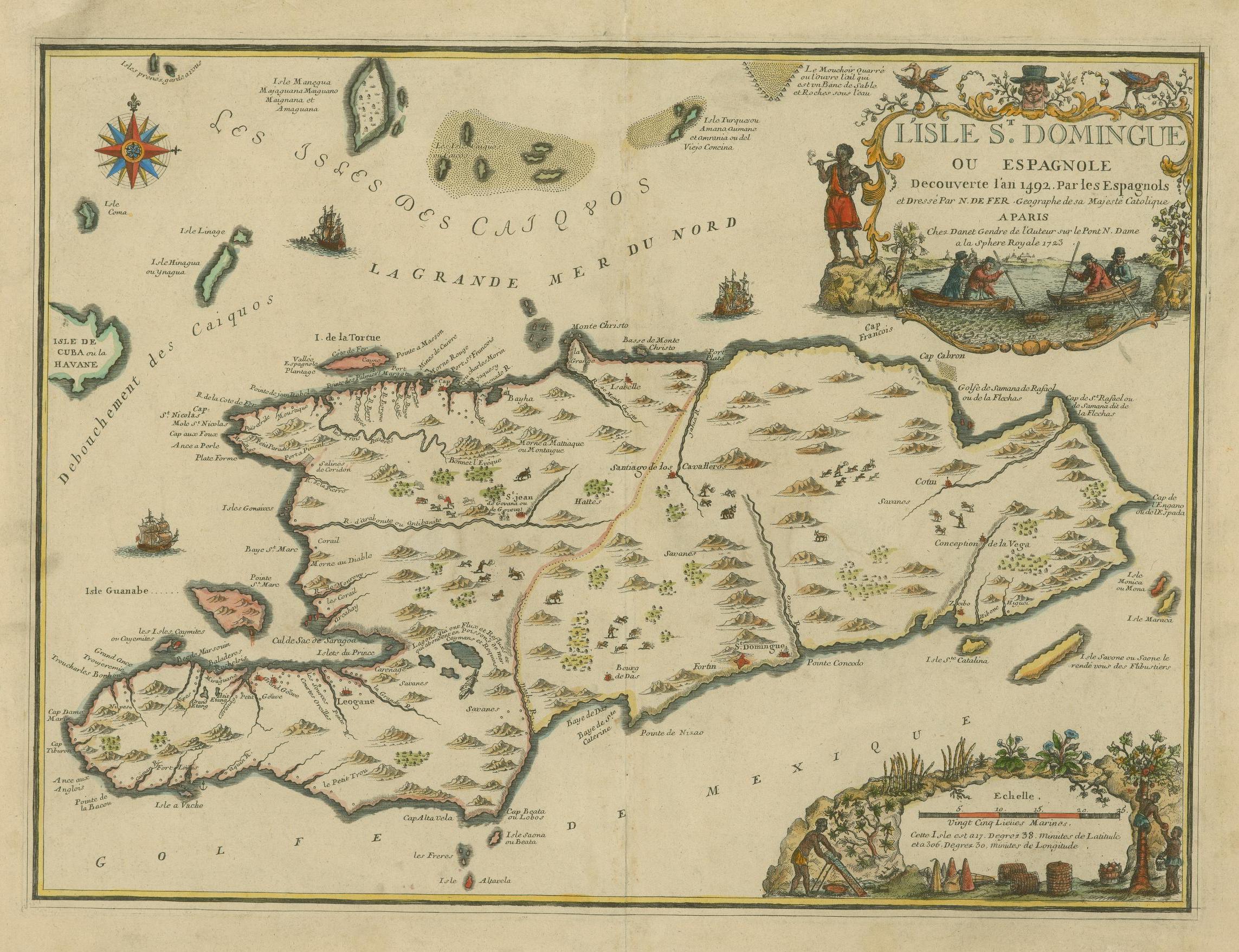
Blog #18 - What do we owe Haiti?
I started thinking about what the Haitian ambassador to the U.S., Raymond Joseph, had said here on this clip from the Rachel Maddow Show below about the impact of Haitian independence on both America and South America:
In summary, the U.S. greatly benefitted from Haiti's independence b/c they were France's last major foothold in the northern part of the western hemisphere, therefore it made little military sense for them to hold onto the Louisiana territory. So Thomas Jefferson and Congress worked out the deal to buy it for an insanely low bargain basement price of .03 cents an acre. Just think of all the benefits we reaped from the Louisiana Purchase.
For South America, several of the countries owe their independence to Simon Bolivar who used Haiti as a launching pad for his revolutionary army. For instance, here's an excerpt from a Bolivar letter written December 23,1822; concerning the strength of Haiti, and the vulnerability of Colombia:
"I then cast my eyes over the endless coastline of Colombia, threatened by the fleets of every nation, by the Europeans whose colonies surround us, and by the Africans of Haiti whose strength is mightier than primeval fire."
 Another quote written March 11, 1825; concerning the military tactics Bolivar wished to implement at this stage of the war against Spain:
"The wars in Russia and Haiti should be our model on some points, but without the terrible type of self-destruction that those countries adopted." 1
Without the sacrifice and support of the Haitian people, the countries in South America and the U.S. may not have become as prosperous or gained their independence as quickly throughout history. If the Spanish hadn't been hassled by the revolutionary movements, they might have been able to bother the United States or reconquer Mexico.
Questions:
1. Do the countries of America and Peru, Colombia, Venezuela, and Bolivia owe Haiti anything? Why or why not?
150 words, due Friday 4/16 by class time.
If interested, the Haitian Embassy in D.C. is sponsoring an art contest to celebrate its Flag Day on May 18. Click here for more info: http://www.haiti.org/files/CALL%20FOR%20ARTISTIC%20CONTRIBUTION.pdf
Sources:
1. http://www.historyvortex.org/HaitianRevolutionImpactSpanishCaribbean.html Haitian Revolution and its Impact on the Spanish Revolution.
In summary, the U.S. greatly benefitted from Haiti's independence b/c they were France's last major foothold in the northern part of the western hemisphere, therefore it made little military sense for them to hold onto the Louisiana territory. So Thomas Jefferson and Congress worked out the deal to buy it for an insanely low bargain basement price of .03 cents an acre. Just think of all the benefits we reaped from the Louisiana Purchase.
For South America, several of the countries owe their independence to Simon Bolivar who used Haiti as a launching pad for his revolutionary army. For instance, here's an excerpt from a Bolivar letter written December 23,1822; concerning the strength of Haiti, and the vulnerability of Colombia:
"I then cast my eyes over the endless coastline of Colombia, threatened by the fleets of every nation, by the Europeans whose colonies surround us, and by the Africans of Haiti whose strength is mightier than primeval fire."
"The wars in Russia and Haiti should be our model on some points, but without the terrible type of self-destruction that those countries adopted." 1
Without the sacrifice and support of the Haitian people, the countries in South America and the U.S. may not have become as prosperous or gained their independence as quickly throughout history. If the Spanish hadn't been hassled by the revolutionary movements, they might have been able to bother the United States or reconquer Mexico.
Questions:
1. Do the countries of America and Peru, Colombia, Venezuela, and Bolivia owe Haiti anything? Why or why not?
150 words, due Friday 4/16 by class time.
If interested, the Haitian Embassy in D.C. is sponsoring an art contest to celebrate its Flag Day on May 18. Click here for more info: http://www.haiti.org/files/CALL%20FOR%20ARTISTIC%20CONTRIBUTION.pdf
Sources:
1. http://www.historyvortex.org/HaitianRevolutionImpactSpanishCaribbean.html Haitian Revolution and its Impact on the Spanish Revolution.
Subscribe to:
Posts (Atom)